Twelve Zodiac Caishen
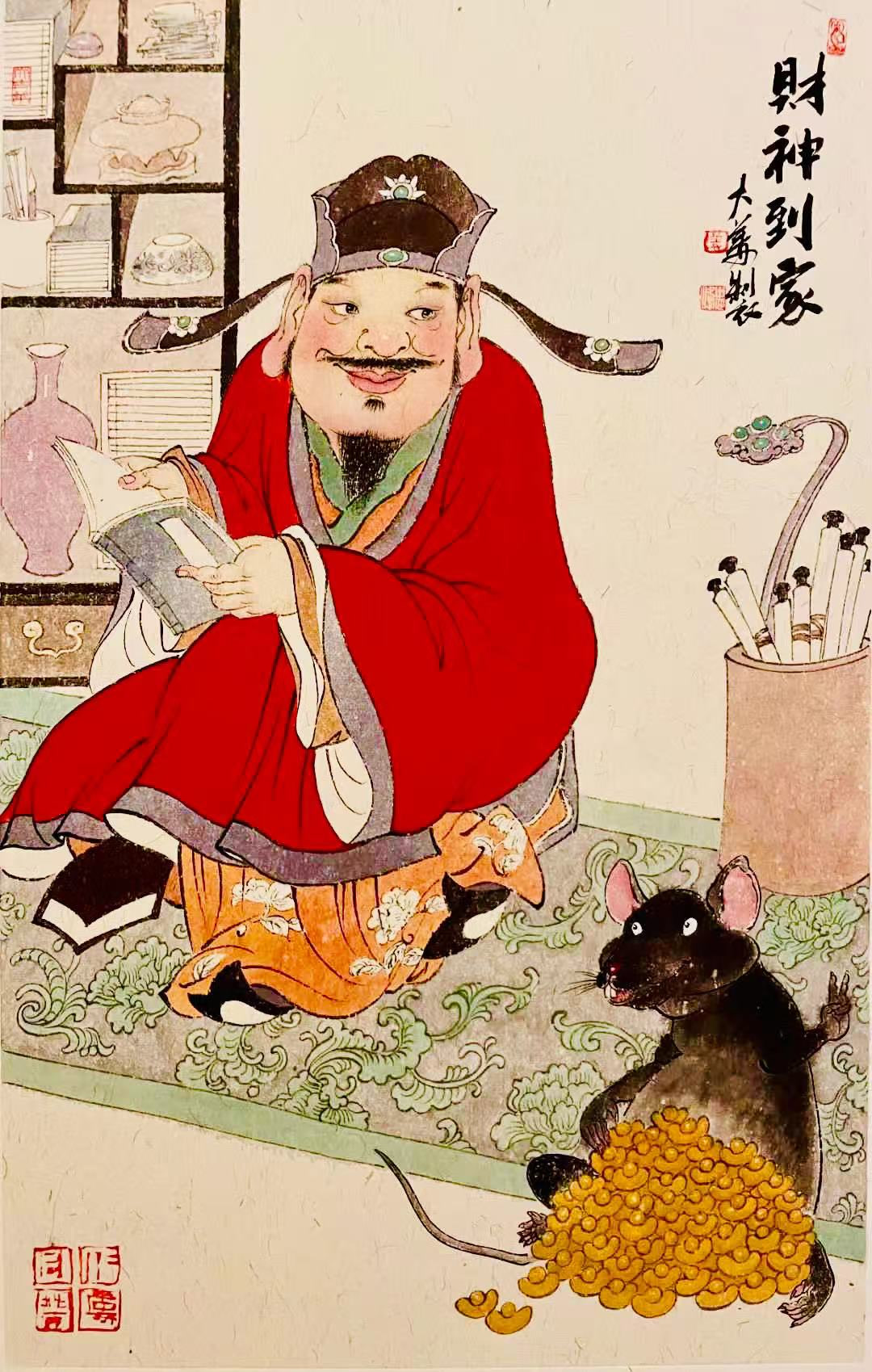
Caishen · Rat
A small rat and the richly dressed figure form an unexpected, humorous encounter.
Ask about this pieceThe painting collection
Twelve zodiac animals accompany Caishen in a colourful, humorous painting series. Find your sign, choose a meaningful gift or discuss a pair for two people.
An illustrated reading · 图文导览
一份心愿,来到家中
A rabbit on a bicycle, a reader, a ruyi. Discover the small details that make these wishes personal. Open a chapter to look more closely.
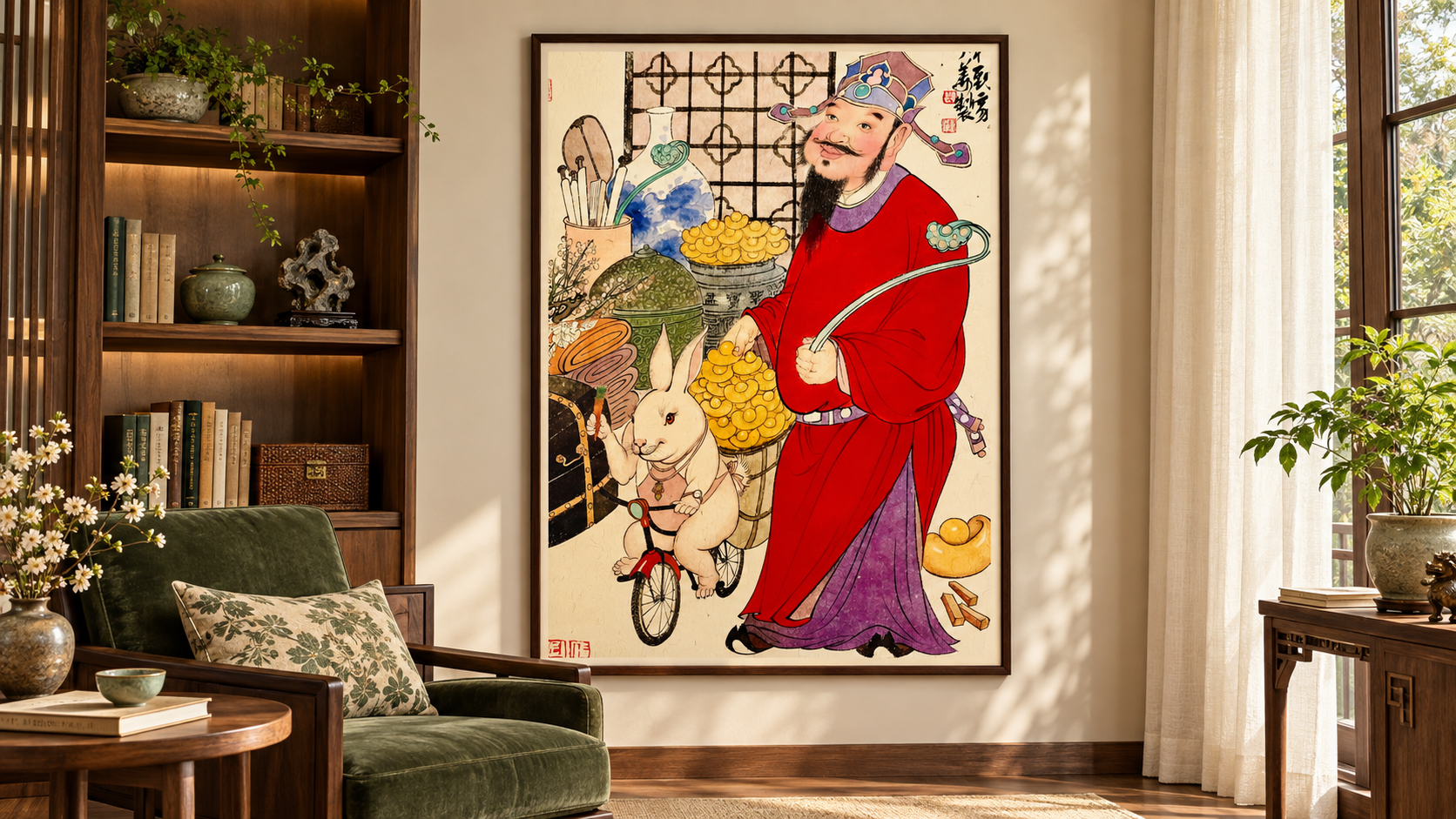
Look for the bicycle beside the rabbit. In another painting, a rat keeps company with a reader. These everyday encounters give this contemporary Caishen series its warmth. The God of Wealth has many forms in Chinese tradition; here, the twelve zodiac animals make the wish for prosperity personal.
先找一找兔子身旁的自行车;另一幅里,老鼠又与读书人相伴。日常的小趣味,让这组当代财神图多了亲切感。中国传统中的财神形象并不只有一种;在这里,十二生肖把对富足的期盼,与个人的生活联系起来。
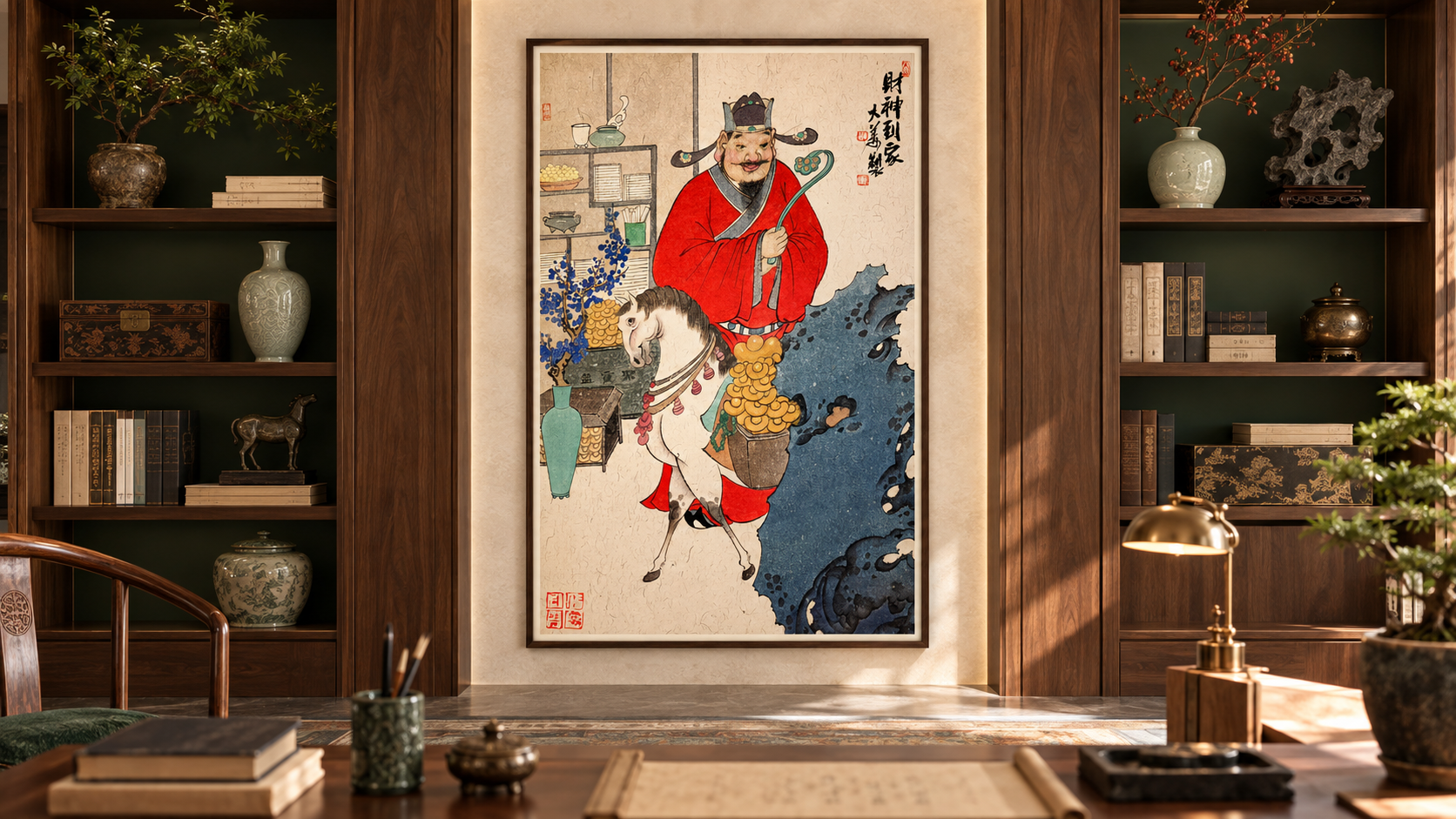
Boat-shaped ingots make wealth easy to recognise. Now follow the curved object held by the figure: a ruyi, whose name expresses “as you wish”. Books, scrolls and vessels share the scene with treasure. In our reading of these paintings, abundance can also mean time to learn and delight in beautiful things.
舟形元宝让人一眼读到“财富”。再看人物手中弯曲的器物,那是寄托顺遂心愿的如意。珍宝旁还有书卷与雅器。我们也愿把这样的丰盛,读成有闲读书、有心赏物的生活。
Each zodiac animal returns every twelve years. Choose someone’s animal for a birthday or new-home gift, or select two different works for a couple. A favourite expression or painted detail can matter just as much as a birth year. This is a contemporary pairing of Caishen and zodiac animals, with room for your own story.
生肖十二年一轮。可以为生日或乔迁选一幅属于对方的生肖,也可以为两个人选成一对。除了出生年份,喜欢的神情与画面细节,同样值得成为选择的理由。这组当代创作,也为你的故事留出了位置。
The finder on this page follows the lunar-calendar convention: the new zodiac year begins on Lunar New Year. A January or February birthday can belong to the preceding animal. Enter the full birth date for those months, then explore the matching work and tell us whom it is for.
本页查询以农历正月初一作为生肖新年的开始。一月或二月出生,生肖可能仍属上一年;请在查询中补充完整生日,再看看相应的作品,也可以告诉我们,这份祝福准备送给谁。
A short film · 一份心愿,来到家中
A rabbit on a bicycle, a reader, a ruyi. Discover the small details that make these wishes personal.
Music: “Gymnopedie No. 1” — Kevin MacLeod; composition by Erik Satie. CC BY 4.0. Edited excerpt, level adjustments and fades.
Original artwork photographs
Choose a composition to explore its story. Dimensions, materials and availability are confirmed with your enquiry.
Twelve Zodiac Caishen
A small rat and the richly dressed figure form an unexpected, humorous encounter.
Ask about this pieceTwelve Zodiac Caishen
A rounded ox and an animated red-robed figure make an exuberant pairing.
Ask about this pieceTwelve Zodiac Caishen
A striped tiger accompanies the smiling figure among golden ingots and decorative objects.
Ask about this pieceTwelve Zodiac Caishen
A rabbit and bicycle add an everyday twist to the festive figure.
The upper inscription is partly cropped in the supplied photograph; request a complete view before choosing.
Ask about this pieceTwelve Zodiac Caishen
A smiling figure rides a coiling dragon, surrounded by curling clouds.
Ask about this pieceTwelve Zodiac Caishen
A winged white snake, bright robes and curved clouds create a fanciful composition.
Ask about this pieceTwelve Zodiac Caishen
A white horse and a red-robed figure share a scene of books, ingots and decorative objects.
Ask about this pieceTwelve Zodiac Caishen
A colourful procession pairs the figure with a small cart and a horned animal.
Ask about this pieceTwelve Zodiac Caishen
A monkey accompanies the red-robed figure within a playful, richly detailed composition.
Ask about this pieceTwelve Zodiac Caishen
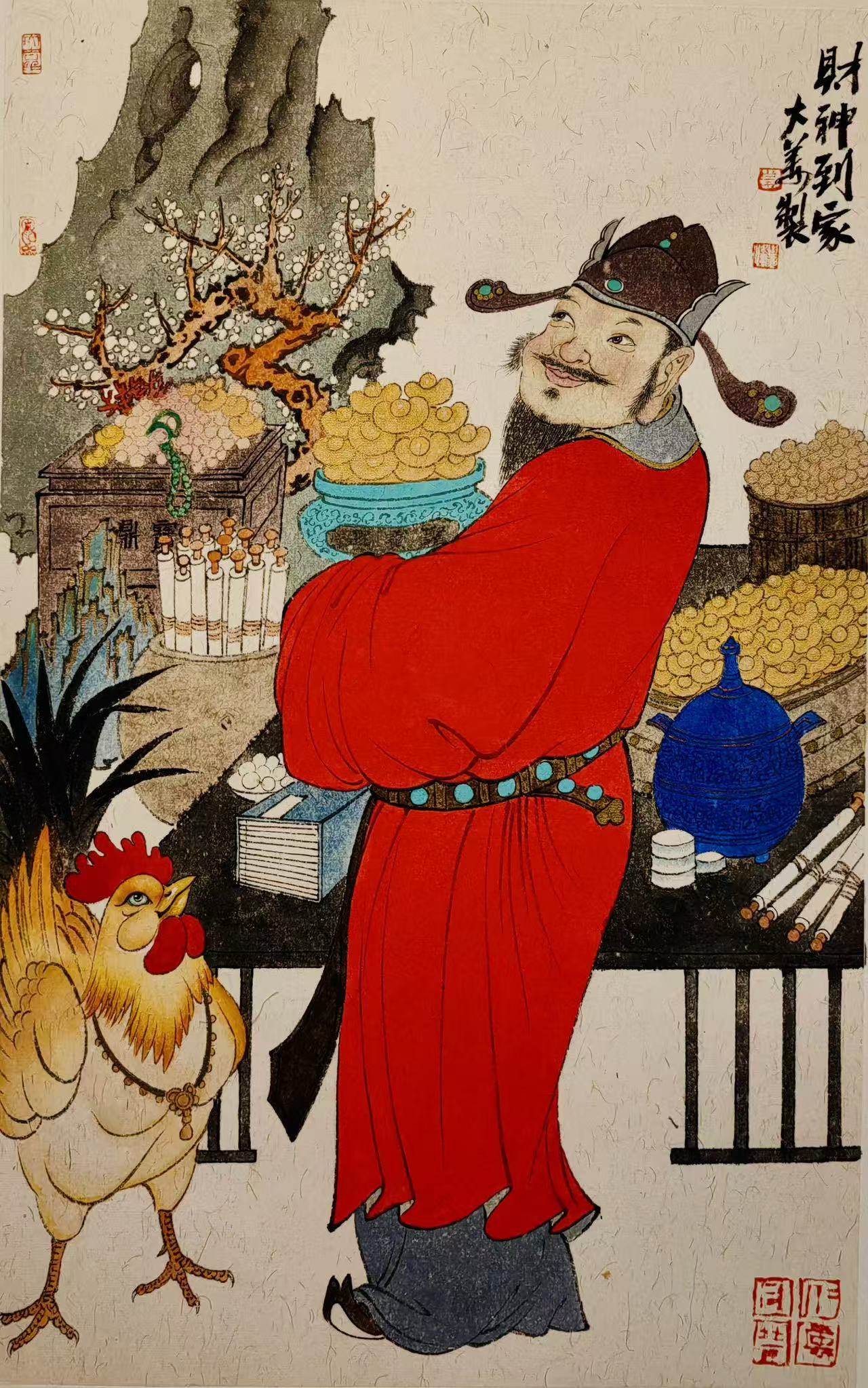
A rooster accompanies the smiling figure among books, treasure and a blue vessel.
Ask about this pieceTwelve Zodiac Caishen
A seated red-robed figure, a dark dog and everyday objects create an intimate, richly detailed scene.
Ask about this pieceTwelve Zodiac Caishen
A dark pig sits beside the cheerful figure, a tea table and piles of coins.
Ask about this pieceEnter a Gregorian birth year. Add a month and day if you would like to check a January or February birthday.
Uses Lunar New Year dates from the Hong Kong Observatory. Your birth date stays on this page.
Consider the outline first: a long neck, rounded shoulder, arched handle or animal silhouette. Then look at how painted decoration changes as the curved surface turns away from the camera.
Blue-and-white decoration has a long history in Chinese ceramics and international exchange. Here, the photographs help you explore colour and form; the maker, body, glaze and firing method of each piece are confirmed individually.
Request dimensions, additional views, availability and a quote. If a vessel will hold water, flowers or food, tell us its intended use so suitability can be confirmed.
A basket, a cat, a tea table or a swing brings these figures into familiar, gently humorous scenes. The appeal lies in expression and brush rhythm as much as in the objects around them.
This selection is grouped as Zen & everyday joy. A monk-like figure is not automatically a named Luohan or a formal devotional image. For a religious commission, agree the identity and attributes before work begins.
Choose the gesture or companion that makes you smile. A single intimate work can suit a reading corner; two or four related scenes can create a considered sequence.
A flower painting can hold two pleasures at once: the movement of a brush and the close observation of a small living thing. Look at the contrast between broad leaves, soft petals and the fine marks of a bee or dragonfly.
Peonies have longstanding associations with wealth and honour in Chinese decorative art. Lotus imagery also carries Buddhist associations of purity: the flower rises from muddy water. These meanings depend on context, rather than assigning one fixed message to every flower.
Begin with a flower, a season or a colour you love. A quiet square can suit an intimate corner; coordinated panels allow a theme to unfold across a longer wall.
Red, black and pale fish gather and disperse among lotus leaves. Their changing directions carry the eye across the wide composition; the open water gives each movement room to breathe.
In Chinese, fish (yú, 鱼) echoes the word for surplus (余). Lotus (lián, 莲) can echo “continuous” (连). Together, the motifs express a wish for continuing abundance. This is a cultural association, rather than a promised outcome.
Nine-fish imagery also has a literary history. The Metropolitan Museum connects it with the “nine similitudes” in the Book of Odes, a poetic tradition associated with longevity and constancy.
The number and arrangement of fish, the lotus colour and the width of the composition are useful starting points for a room-specific brief.
The red and black koi move around a shared centre. Their bodies, tails and the surrounding ripples create a circular rhythm, while small plants interrupt the open water.
Yin and yang describe contrasting yet interdependent forces: each is understood in relation to the other, and their relationship changes through cycles. Day and night offer a familiar example.
Here, the circling fish invite a visual reading of balance as movement. This is an interpretation of the painting’s composition, rather than a claim that this particular red-and-black arrangement reproduces an ancient diagram.
Discuss whether you prefer a quieter composition with more open water or a stronger sense of circular energy. Colour and surrounding detail can be considered alongside your interior.
Follow the curve of the dragon’s body, then the smaller rhythms of scales, claws and clouds. A vertical arrangement draws the eye upwards; a horizontal one can carry that movement across a larger wall.
The Chinese dragon has longstanding associations with water, protection and good fortune, as well as imperial authority. Its meaning depends on the object and its historical setting. A Qing court vase in the Metropolitan Museum provides one example of the dragon’s imperial use.
In these contemporary paintings, golden colour and elaborate detail offer a courtly visual reference. They do not establish a historical date, imperial provenance or a particular rank for the works.
Start with the wall proportions and the distance from which the painting will be seen. A large dragon needs room for its full silhouette and cloud patterns to be appreciated.
The full figures place decorated saddles and harnesses within curling clouds. The close portraits shift attention to another kind of detail: an alert eye, the turn of a head and the edges of the mane.
The horse is one of the twelve animals in the Chinese zodiac’s repeating year cycle. A horse commission can mark a personal connection to that tradition, or simply a love of the animal.
Energy, poise and freedom are useful ways to discuss the feeling you want from a painting. Here they are creative interpretations, rather than fixed meanings attached to every horse image.
Choose between a full figure and a closer portrait, then consider the horse’s colour, pose, background and the role of decorative detail.
Zhong Kui is a protective figure in Chinese folklore. A legend traced to the Tang dynasty tells of his appearance in Emperor Minghuang’s dream. His commanding face, official hat and dramatic gestures give painters a subject rich in character. The red-line example in our collection offers one expressive approach.
These contemporary Caishen paintings pair the God of Wealth with each of the twelve Chinese zodiac animals: Rat, Ox, Tiger, Rabbit, Dragon, Snake, Horse, Goat / Sheep, Monkey, Rooster, Dog and Pig. The festive figure carries a traditional wish for prosperity, while the animal gives each work a personal connection.
Choose your own zodiac sign, mark someone’s birth year or discuss a pair for two people. The cycle repeats every twelve years. In the lunar-calendar tradition used here, the year changes at Lunar New Year, so January and February birthdays need a closer check.
Discuss one zodiac painting, a pair or a coordinated group. Subject, colour, mounting and the proportions of your room can shape the brief. The imagery expresses cultural wishes; it does not promise financial results.
Luohan is the Chinese name for the Buddhist arhat. These figures are understood as accomplished disciples of the Buddha and guardians of his teaching. Their varied expressions and postures invite attention to contemplation and individual character. Discuss a single figure or a considered group, in colour or ink.
The dragon’s associations with water and imperial authority give the subject a rich cultural background. For a larger commission, the sweep of the body, the rhythm of clouds and the proportions of the wall become central. Agree the composition and intended setting before choosing the finer decorative details.
Rat, ox, tiger, rabbit, dragon, snake, horse, goat or sheep, monkey, rooster, dog and pig form a repeating twelve-year cycle. Commission a single animal for a personal occasion, or discuss a complete sequence. The connection is to a calendrical tradition; a birth sign does not determine a person’s character.