Begin with the silhouette. Mouth, neck, shoulder and foot give a vessel its presence; the painted subjects bring another layer of meaning.
An illustrated reading · 图文导览
Reading a vessel
观器识意
Follow the mouth, shoulder and foot, then look again at the subjects painted across the surface. Open a chapter to look more closely.
01Follow the outline first先看口、肩、腹、足
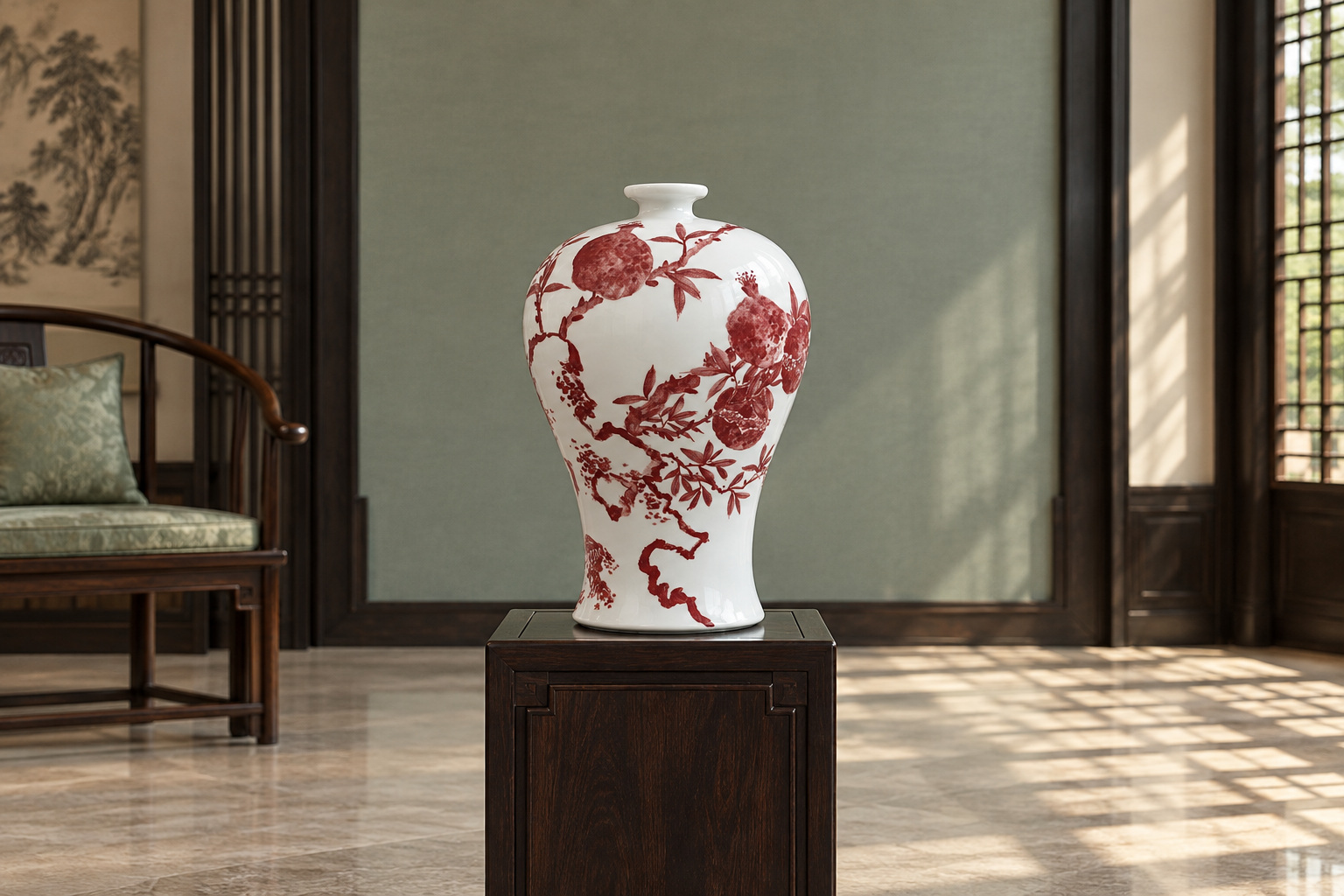
A narrow mouth, full shoulder and tapering body suggest the meiping form, historically used to hold wine. Here, the painted pomegranates open to reveal many seeds, a traditional wish for children and a flourishing family. The broad shoulder benefits from side light and enough clear wall for its outline to register.
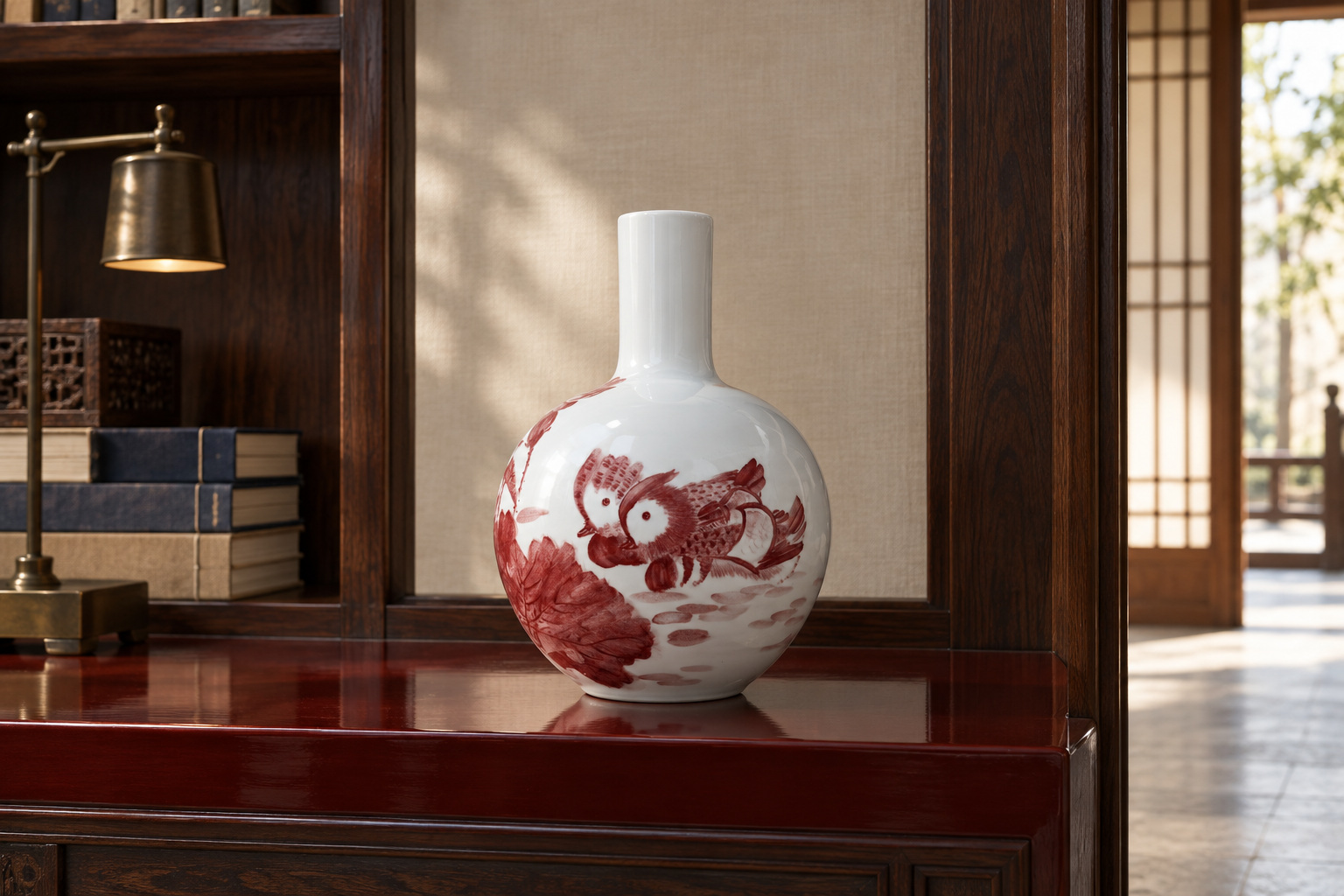
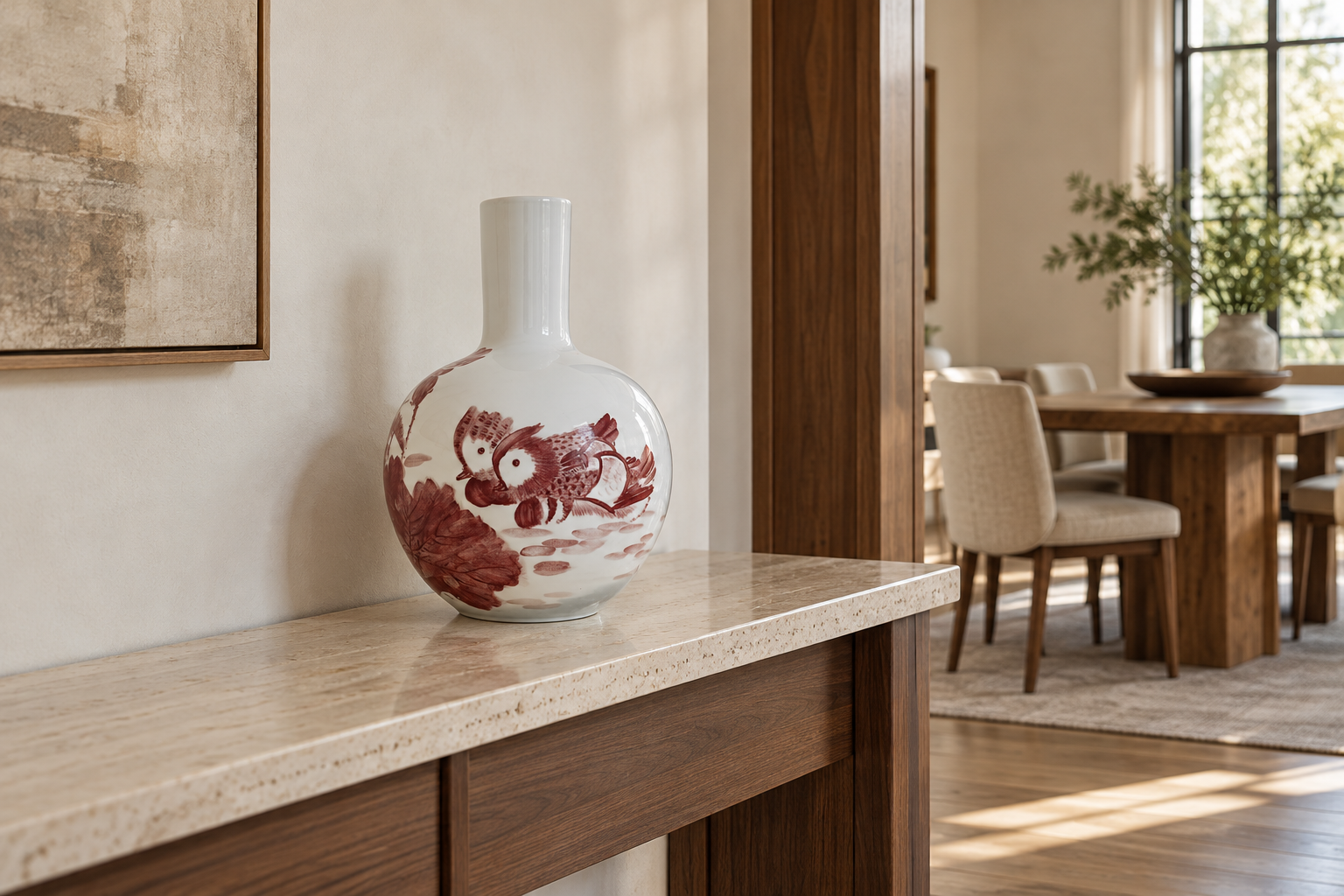
A long neck rises above a rounded body, leaving the painted pond room to spread. Paired mandarin ducks traditionally express affection and companionship. Set this form on a deep console or in an open alcove, with clearance above the neck. Its red and blue decoration can quietly connect with a room’s textiles.
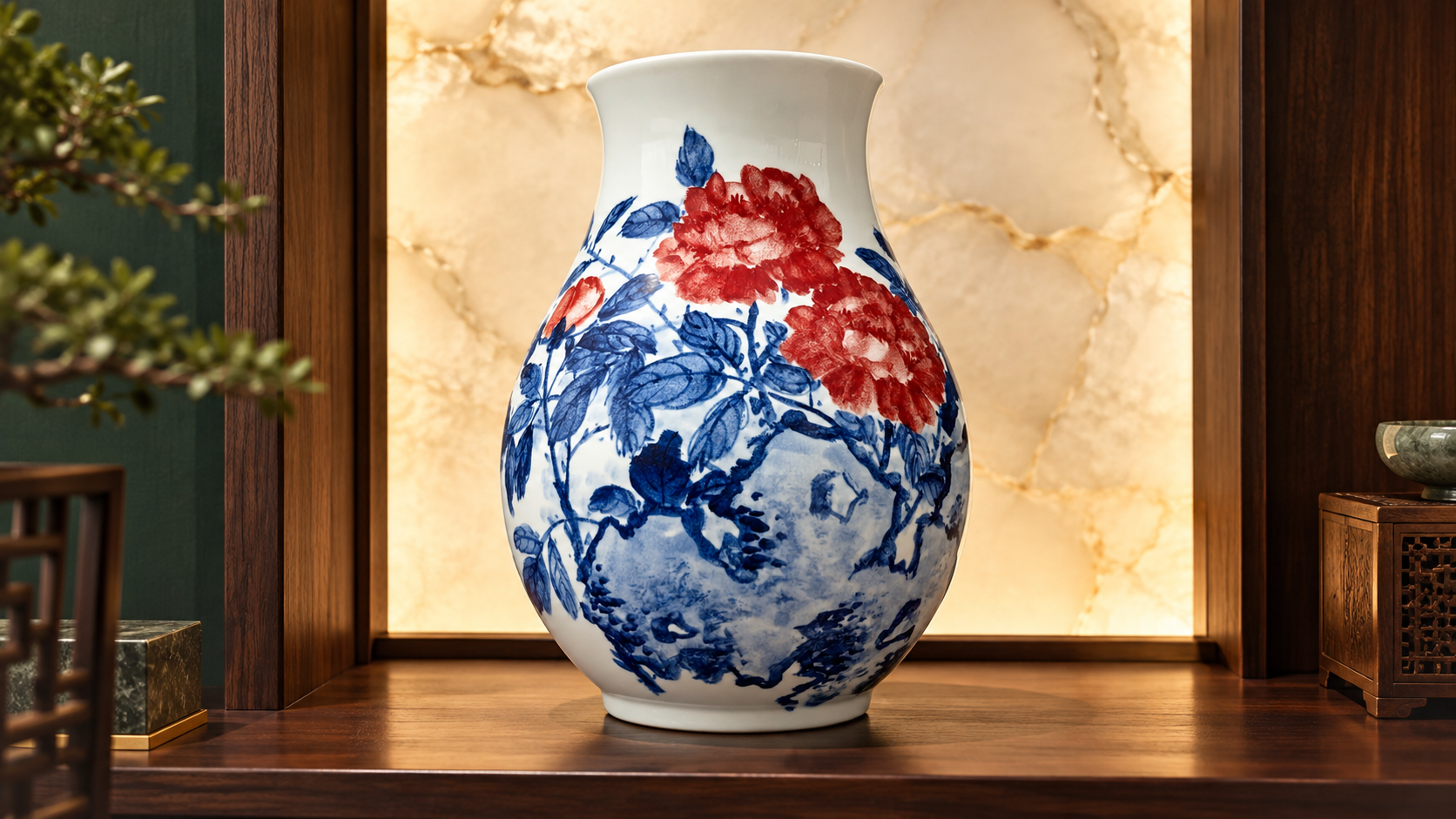
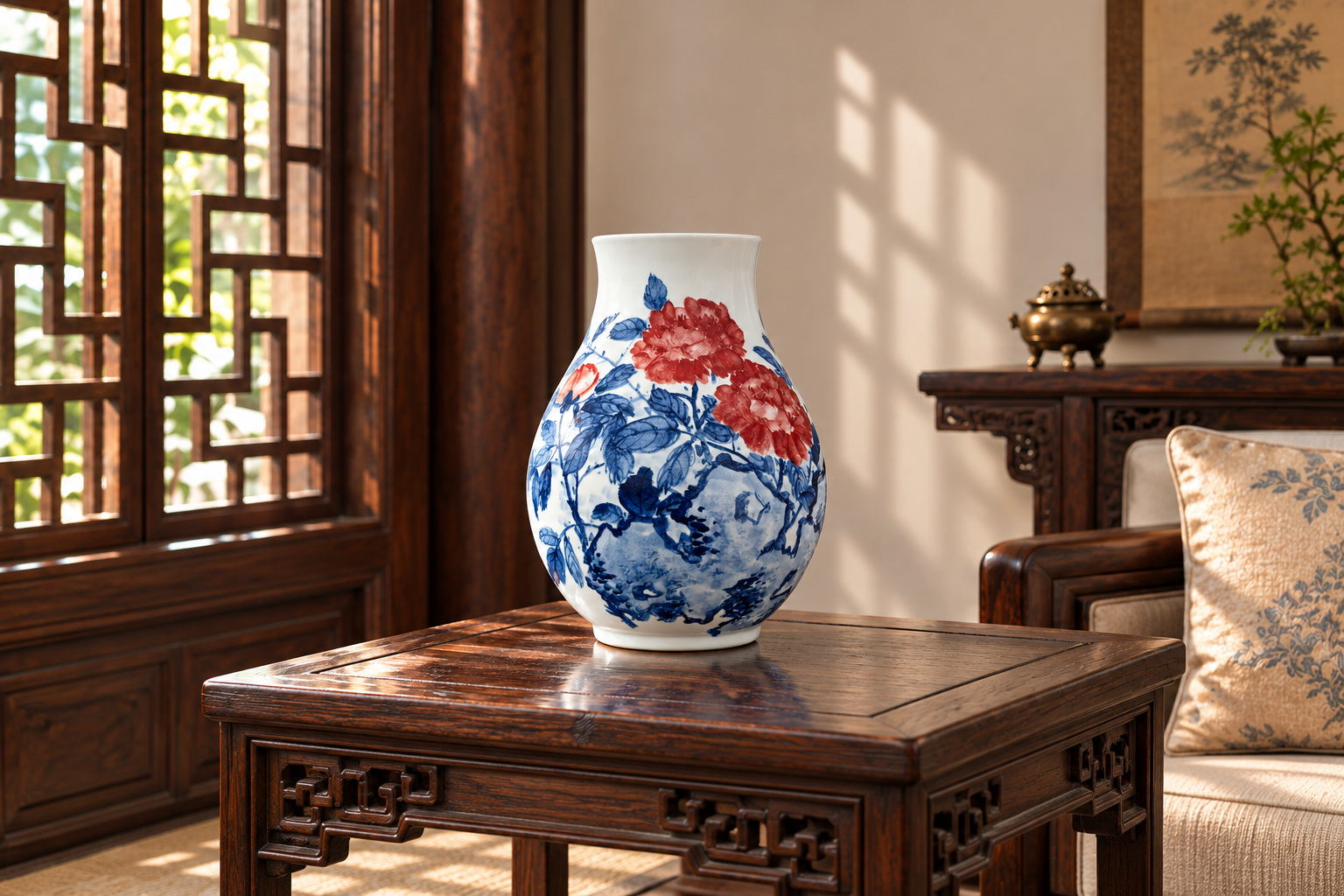
Red peonies and blue foliage curve around a full-bodied vase. Peonies traditionally suggest prosperity and honour; the rock gives the painted arrangement a firm visual base. One generous vessel can bring warmth to a reception room or dining area. Leave neighbouring objects lower or farther away so the whole scene remains readable.
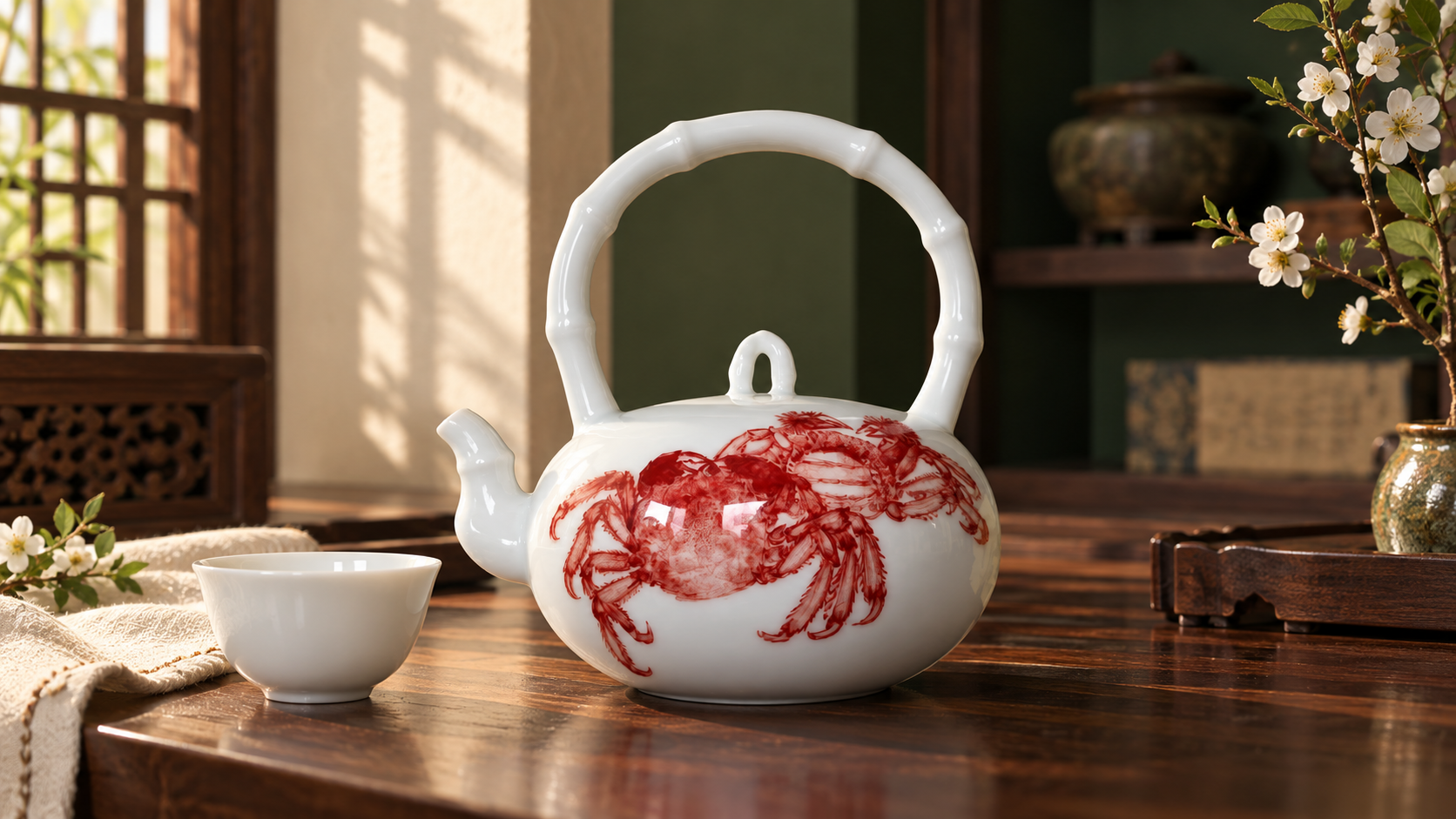
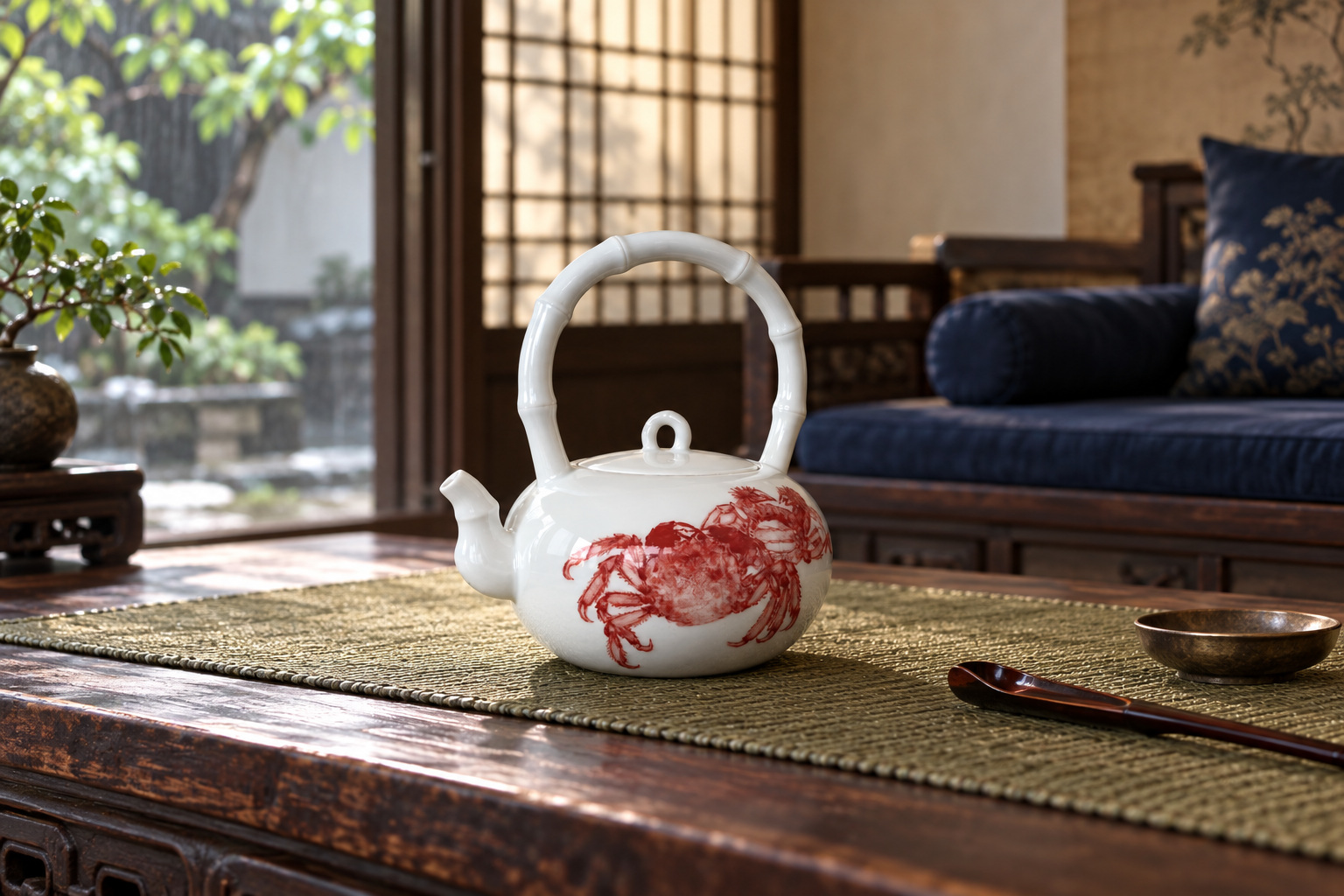
Look for the spout, lid and overhead handle: together they identify a teapot form. The handle bends like a bamboo branch, while painted crabs bring a lively waterside scene to the body. A tea cabinet or low display shelf invites a closer look. Ask us for measured dimensions and suitability before planning practical tea use.
Follow the mouth, shoulder and foot, then look again at the subjects painted across the surface.
English & Chinese subtitles · Music1:32
Music: “Gymnopedie No. 1” — Kevin MacLeod; composition by Erik Satie. CC BY 4.0. Edited excerpt, level adjustments and fades.
Explore four vessel forms · 四种器形
01 短颈丰腹
The rounded vase
A short neck and generous belly let a painted scene unfold around the vessel. The fuller outline settles well on a broad console or an open shelf.
Some rounded forms recall a woven fishing basket. “Fishbasket vase” describes more than one historical type; here, we use the visible shape to name the piece.
02 天球瓶
The tianqiuping
A tianqiuping, or celestial-globe vase, has a straight neck rising above a rounded, spherical body. The contrast between the slender neck and full belly gives the form its distinctive balance.
Leave space beside the belly and above the mouth when placing it on a console or in an alcove. Here, paired mandarin ducks and lotus leaves unfold across the curved surface.
03 丰肩敛腹
The meiping form
A small mouth, short neck, broad shoulders and tapering body define the meiping silhouette. Historical examples served as wine containers.
Meiping names the form: the painted decoration need not be plum blossom. This example carries pomegranates. It can stand alone, without an arrangement of flowers.
04 提梁有致
The loop-handle teapot
The arching handle, fitted lid and short spout give the object a compact, sculptural profile. Here, moulded bamboo-like nodes articulate the handle and spout.
A tea-room cabinet or close-view shelf lets the double-crab painting be seen. Ask the supplying studio about suitability before using it to serve tea.
Explore six painted meanings · 六种纹饰
纹中有意 · Read the painted surface
A small scene. A lasting wish.
First look at what is actually painted. A traditional association and a personal response can each enrich the way a piece is chosen.
花开富贵
Peonies & Rock · Rounded Vase
Peonies are traditionally associated with prosperity and honour. On a vase, the subject can also participate in the familiar wish for prosperity and peace. Here, the large blossoms and dark rock make that expansive mood visible.
Suggested setting & references
A substantial console, reception sideboard or living-room alcove. Give the painted belly an uncluttered background; a low companion object can support the composition.
The lotus pond invites associations with composure and natural life. In the Northern Song writer Zhou Dunyi’s account, the lotus became a model of integrity: growing through mud while remaining unstained.
Suggested setting & references
A reading room, tea corner or quiet lounge, against pale plaster, warm oak or a subdued blue-grey wall. A clear view of the bird matters more than a prescribed compass direction.
Two mandarin ducks among lotus leaves offer a traditional image of affection and companionship. The long neck draws the eye upward while the rounded belly holds the paired scene together.
Suggested setting & references
A living-room console, a bridal-suite sitting area or a considered wedding gift. Allow vertical space above the neck and sufficient support beneath the broad belly.
The many seeds of a pomegranate traditionally express wishes for children and a flourishing family. The meiping form has a separate history as a wine container: its name describes a vessel type, not the flower painted on it.
Suggested setting & references
A dining sideboard, family living space or hotel dining alcove. The narrow mouth and broad shoulder are especially effective when the vessel is shown without a large flower arrangement.
The crabs bring a lively waterside subject to a compact teapot. In traditional auspicious imagery, the crab’s shell, jia, can also carry a wordplay on academic distinction.
Suggested setting & references
A tea-room display, a low cabinet in a restaurant lounge or a close-view shelf. Until practical use is confirmed, present it as a decorative ceramic; a photograph cannot establish food safety or heat resistance.
The two birds create an intimate scene of shared presence. Their closeness and the open space around them invite a quiet, personal reading of companionship.
Suggested setting & references
A library alcove, hotel reading niche or living-room cabinet. Set it where the birds can be seen close to eye level, with enough height for the long neck.
These are our planning ranges for a room, rather than measurements of the pieces shown. We confirm each proposed piece’s actual height, width, base and weight with you.
Suggested overall height
Where it may sit well
Up to about 25 cm
Close-view display: desk, bookshelf or a small cabinet. Small objects need room around them and a position where detail is visible.
About 25–45 cm
Console, sideboard or an open shelf with adequate depth. Check the widest belly, not only the foot.
Above about 45 cm
A broad alcove or purpose-designed plinth. Check weight, stability, overhead clearance and distance from circulation routes.
Bring us your setting
Three measurements. One considered choice.
The usable width and depth of the surface, with a room photograph.
The clear height above it, and where you normally view the piece.
The shelf or plinth’s load limit, if applicable. We will confirm the object’s size and weight.
Consider the outline first: a long neck, rounded shoulder, arched handle or animal silhouette. Then look at how painted decoration changes as the curved surface turns away from the camera.
A place in the room
Blue-and-white decoration has a long history in Chinese ceramics and international exchange. Here, the photographs help you explore colour and form; the maker, body, glaze and firing method of each piece are confirmed individually.
Before choosing
Request dimensions, additional views, availability and a quote. If a vessel will hold water, flowers or food, tell us its intended use so suitability can be confirmed.
A basket, a cat, a tea table or a swing brings these figures into familiar, gently humorous scenes. The appeal lies in expression and brush rhythm as much as in the objects around them.
Character before a label
This selection is grouped as Zen & everyday joy. A monk-like figure is not automatically a named Luohan or a formal devotional image. For a religious commission, agree the identity and attributes before work begins.
For your commission
Choose the gesture or companion that makes you smile. A single intimate work can suit a reading corner; two or four related scenes can create a considered sequence.
Flowers, insects and open space
A flower painting can hold two pleasures at once: the movement of a brush and the close observation of a small living thing. Look at the contrast between broad leaves, soft petals and the fine marks of a bee or dragonfly.
A cultural reading
Peonies have longstanding associations with wealth and honour in Chinese decorative art. Lotus imagery also carries Buddhist associations of purity: the flower rises from muddy water. These meanings depend on context, rather than assigning one fixed message to every flower.
For your commission
Begin with a flower, a season or a colour you love. A quiet square can suit an intimate corner; coordinated panels allow a theme to unfold across a longer wall.
Red, black and pale fish gather and disperse among lotus leaves. Their changing directions carry the eye across the wide composition; the open water gives each movement room to breathe.
A language of wishes
In Chinese, fish (yú, 鱼) echoes the word for surplus (余). Lotus (lián, 莲) can echo “continuous” (连). Together, the motifs express a wish for continuing abundance. This is a cultural association, rather than a promised outcome.
Nine-fish imagery also has a literary history. The Metropolitan Museum connects it with the “nine similitudes” in the Book of Odes, a poetic tradition associated with longevity and constancy.
For a commission
The number and arrangement of fish, the lotus colour and the width of the composition are useful starting points for a room-specific brief.
The red and black koi move around a shared centre. Their bodies, tails and the surrounding ripples create a circular rhythm, while small plants interrupt the open water.
A contemporary reading
Yin and yang describe contrasting yet interdependent forces: each is understood in relation to the other, and their relationship changes through cycles. Day and night offer a familiar example.
Here, the circling fish invite a visual reading of balance as movement. This is an interpretation of the painting’s composition, rather than a claim that this particular red-and-black arrangement reproduces an ancient diagram.
For a commission
Discuss whether you prefer a quieter composition with more open water or a stronger sense of circular energy. Colour and surrounding detail can be considered alongside your interior.
Follow the curve of the dragon’s body, then the smaller rhythms of scales, claws and clouds. A vertical arrangement draws the eye upwards; a horizontal one can carry that movement across a larger wall.
More than one meaning
The Chinese dragon has longstanding associations with water, protection and good fortune, as well as imperial authority. Its meaning depends on the object and its historical setting. A Qing court vase in the Metropolitan Museum provides one example of the dragon’s imperial use.
In these contemporary paintings, golden colour and elaborate detail offer a courtly visual reference. They do not establish a historical date, imperial provenance or a particular rank for the works.
For a commission
Start with the wall proportions and the distance from which the painting will be seen. A large dragon needs room for its full silhouette and cloud patterns to be appreciated.
The full figures place decorated saddles and harnesses within curling clouds. The close portraits shift attention to another kind of detail: an alert eye, the turn of a head and the edges of the mane.
A personal connection
The horse is one of the twelve animals in the Chinese zodiac’s repeating year cycle. A horse commission can mark a personal connection to that tradition, or simply a love of the animal.
Energy, poise and freedom are useful ways to discuss the feeling you want from a painting. Here they are creative interpretations, rather than fixed meanings attached to every horse image.
For a commission
Choose between a full figure and a closer portrait, then consider the horse’s colour, pose, background and the role of decorative detail.
Zhong Kui is a protective figure in Chinese folklore. A legend traced to the Tang dynasty tells of his appearance in Emperor Minghuang’s dream. His commanding face, official hat and dramatic gestures give painters a subject rich in character. The red-line example in our collection offers one expressive approach.
These contemporary Caishen paintings pair the God of Wealth with each of the twelve Chinese zodiac animals: Rat, Ox, Tiger, Rabbit, Dragon, Snake, Horse, Goat / Sheep, Monkey, Rooster, Dog and Pig. The festive figure carries a traditional wish for prosperity, while the animal gives each work a personal connection.
A meaningful gift
Choose your own zodiac sign, mark someone’s birth year or discuss a pair for two people. The cycle repeats every twelve years. In the lunar-calendar tradition used here, the year changes at Lunar New Year, so January and February birthdays need a closer check.
For your commission
Discuss one zodiac painting, a pair or a coordinated group. Subject, colour, mounting and the proportions of your room can shape the brief. The imagery expresses cultural wishes; it does not promise financial results.
Luohan is the Chinese name for the Buddhist arhat. These figures are understood as accomplished disciples of the Buddha and guardians of his teaching. Their varied expressions and postures invite attention to contemplation and individual character. Discuss a single figure or a considered group, in colour or ink.
The dragon’s associations with water and imperial authority give the subject a rich cultural background. For a larger commission, the sweep of the body, the rhythm of clouds and the proportions of the wall become central. Agree the composition and intended setting before choosing the finer decorative details.
Rat, ox, tiger, rabbit, dragon, snake, horse, goat or sheep, monkey, rooster, dog and pig form a repeating twelve-year cycle. Commission a single animal for a personal occasion, or discuss a complete sequence. The connection is to a calendrical tradition; a birth sign does not determine a person’s character.