Look closely
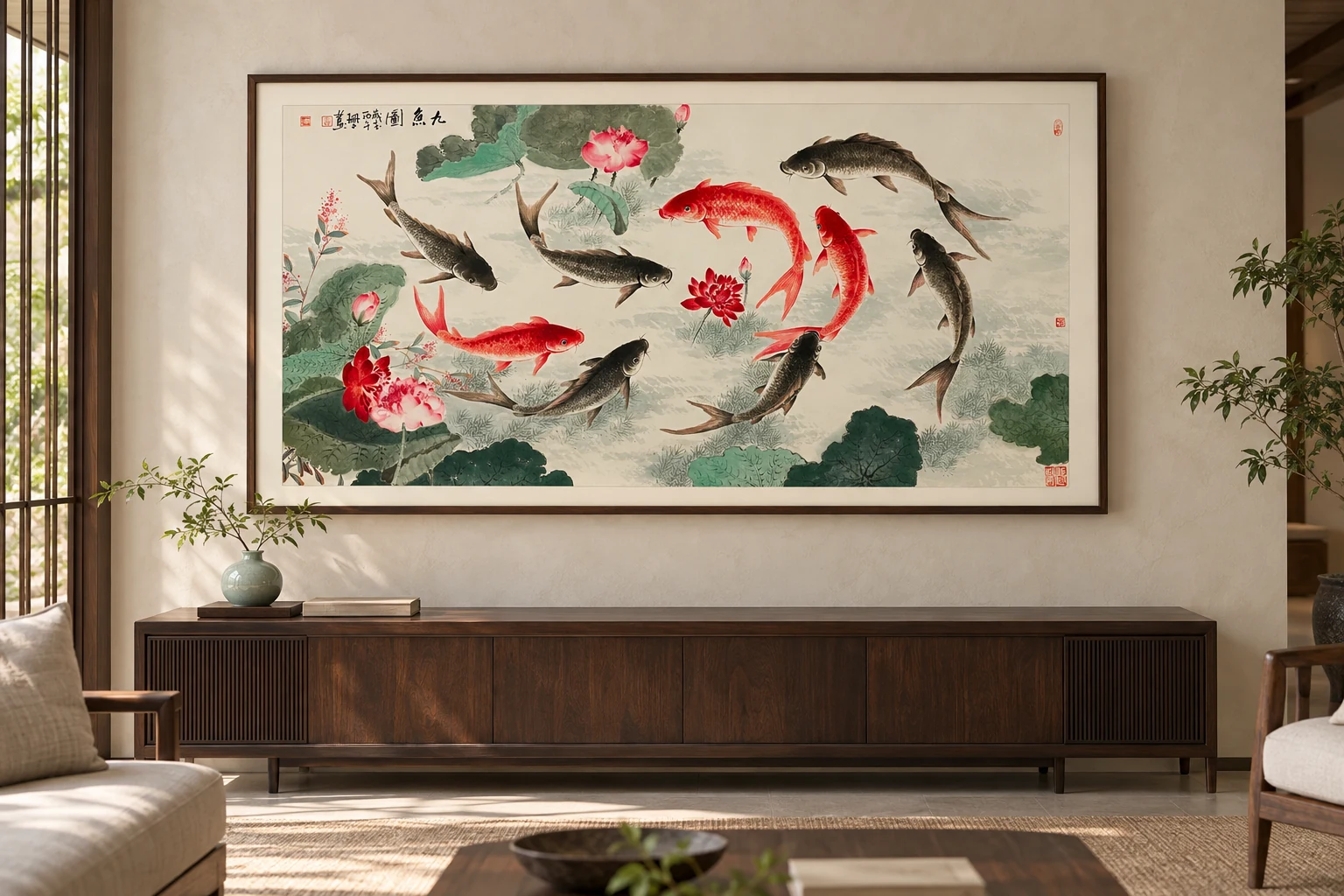
Red, black and pale fish gather and disperse among lotus leaves. Their changing directions carry the eye across the wide composition; the open water gives each movement room to breathe.
A language of wishes
In Chinese, fish (yú, 鱼) echoes the word for surplus (余). Lotus (lián, 莲) can echo “continuous” (连). Together, the motifs express a wish for continuing abundance. This is a cultural association, rather than a promised outcome.
Nine-fish imagery also has a literary history. The Metropolitan Museum connects it with the “nine similitudes” in the Book of Odes, a poetic tradition associated with longevity and constancy.
For a commission
The number and arrangement of fish, the lotus colour and the width of the composition are useful starting points for a room-specific brief.
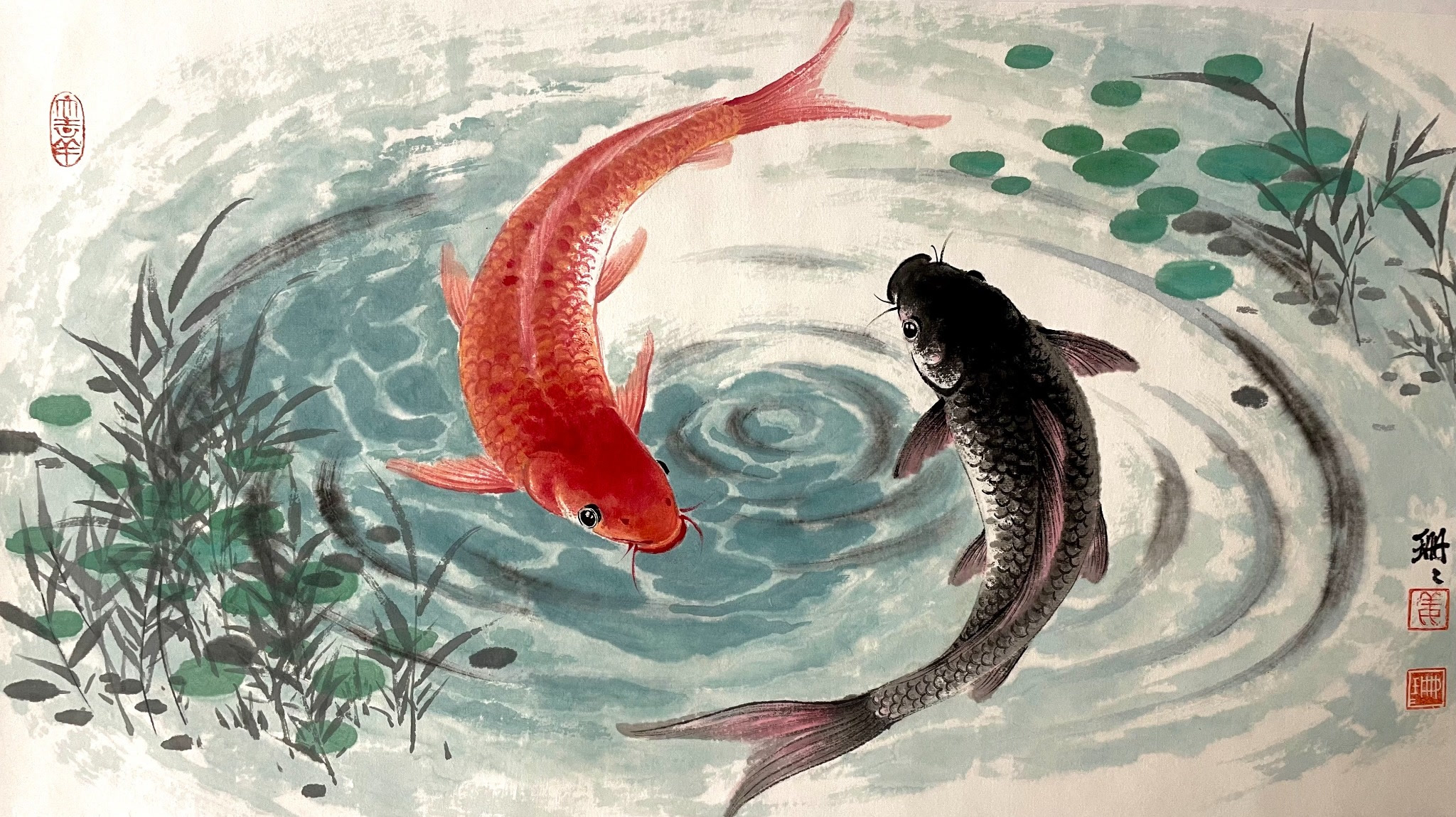
Look closely
The red and black koi move around a shared centre. Their bodies, tails and the surrounding ripples create a circular rhythm, while small plants interrupt the open water.
A contemporary reading
Yin and yang describe contrasting yet interdependent forces: each is understood in relation to the other, and their relationship changes through cycles. Day and night offer a familiar example.
Here, the circling fish invite a visual reading of balance as movement. This is an interpretation of the painting’s composition, rather than a claim that this particular red-and-black arrangement reproduces an ancient diagram.
For a commission
Discuss whether you prefer a quieter composition with more open water or a stronger sense of circular energy. Colour and surrounding detail can be considered alongside your interior.
Look closely
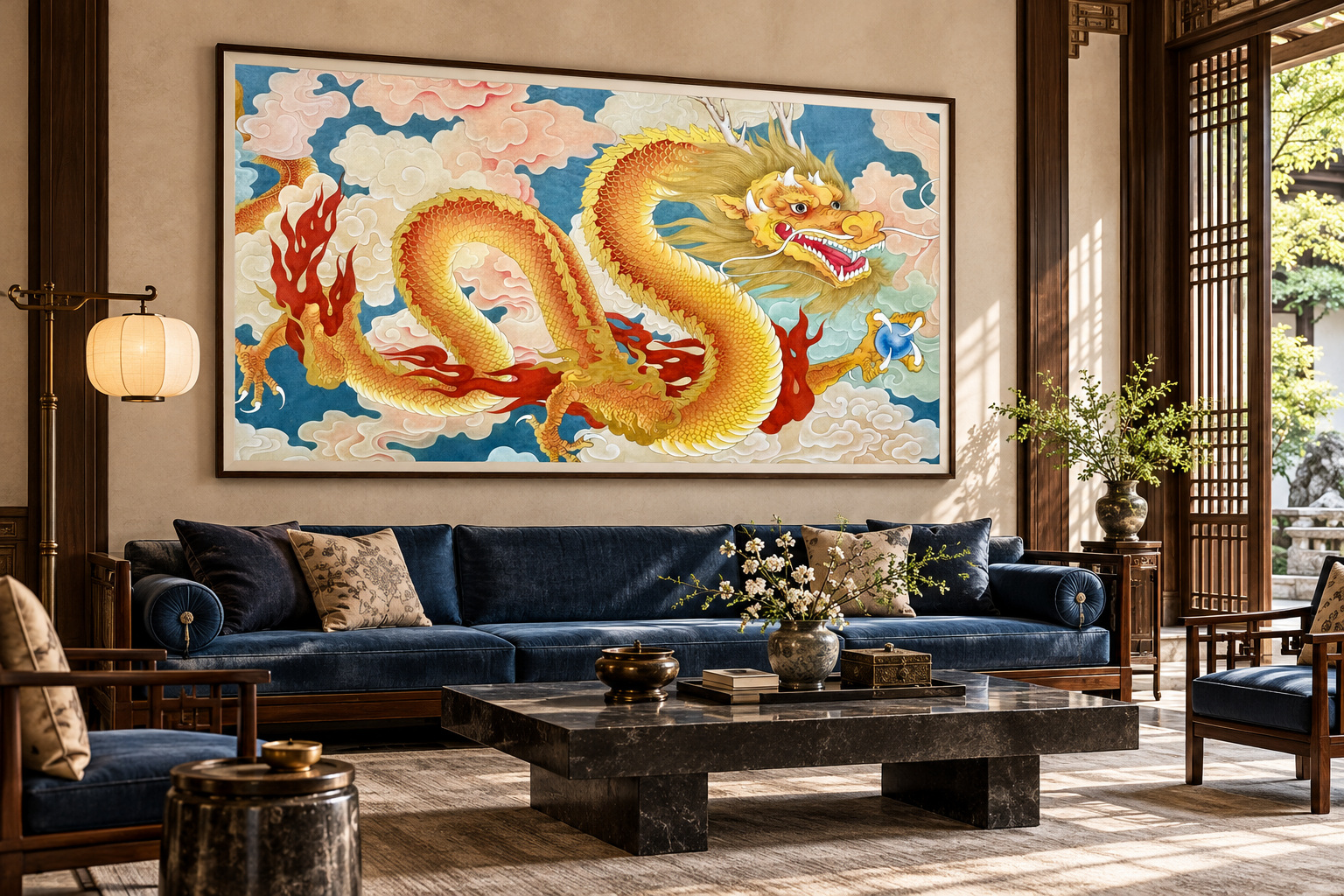
Follow the curve of the dragon’s body, then the smaller rhythms of scales, claws and clouds. A vertical arrangement draws the eye upwards; a horizontal one can carry that movement across a larger wall.
More than one meaning
The Chinese dragon has longstanding associations with water, protection and good fortune, as well as imperial authority. Its meaning depends on the object and its historical setting. A Qing court vase in the Metropolitan Museum provides one example of the dragon’s imperial use.
In these contemporary paintings, golden colour and elaborate detail offer a courtly visual reference. They do not establish a historical date, imperial provenance or a particular rank for the works.
For a commission
Start with the wall proportions and the distance from which the painting will be seen. A large dragon needs room for its full silhouette and cloud patterns to be appreciated.
Look closely
The full figures place decorated saddles and harnesses within curling clouds. The close portraits shift attention to another kind of detail: an alert eye, the turn of a head and the edges of the mane.
A personal connection
The horse is one of the twelve animals in the Chinese zodiac’s repeating year cycle. A horse commission can mark a personal connection to that tradition, or simply a love of the animal.
Energy, poise and freedom are useful ways to discuss the feeling you want from a painting. Here they are creative interpretations, rather than fixed meanings attached to every horse image.
For a commission
Choose between a full figure and a closer portrait, then consider the horse’s colour, pose, background and the role of decorative detail.
Zhong Kui is a protective figure in Chinese folklore. A legend traced to the Tang dynasty tells of his appearance in Emperor Minghuang’s dream. His commanding face, official hat and dramatic gestures give painters a subject rich in character. The red-line example in our collection offers one expressive approach.
Twelve animals, twelve personal connections
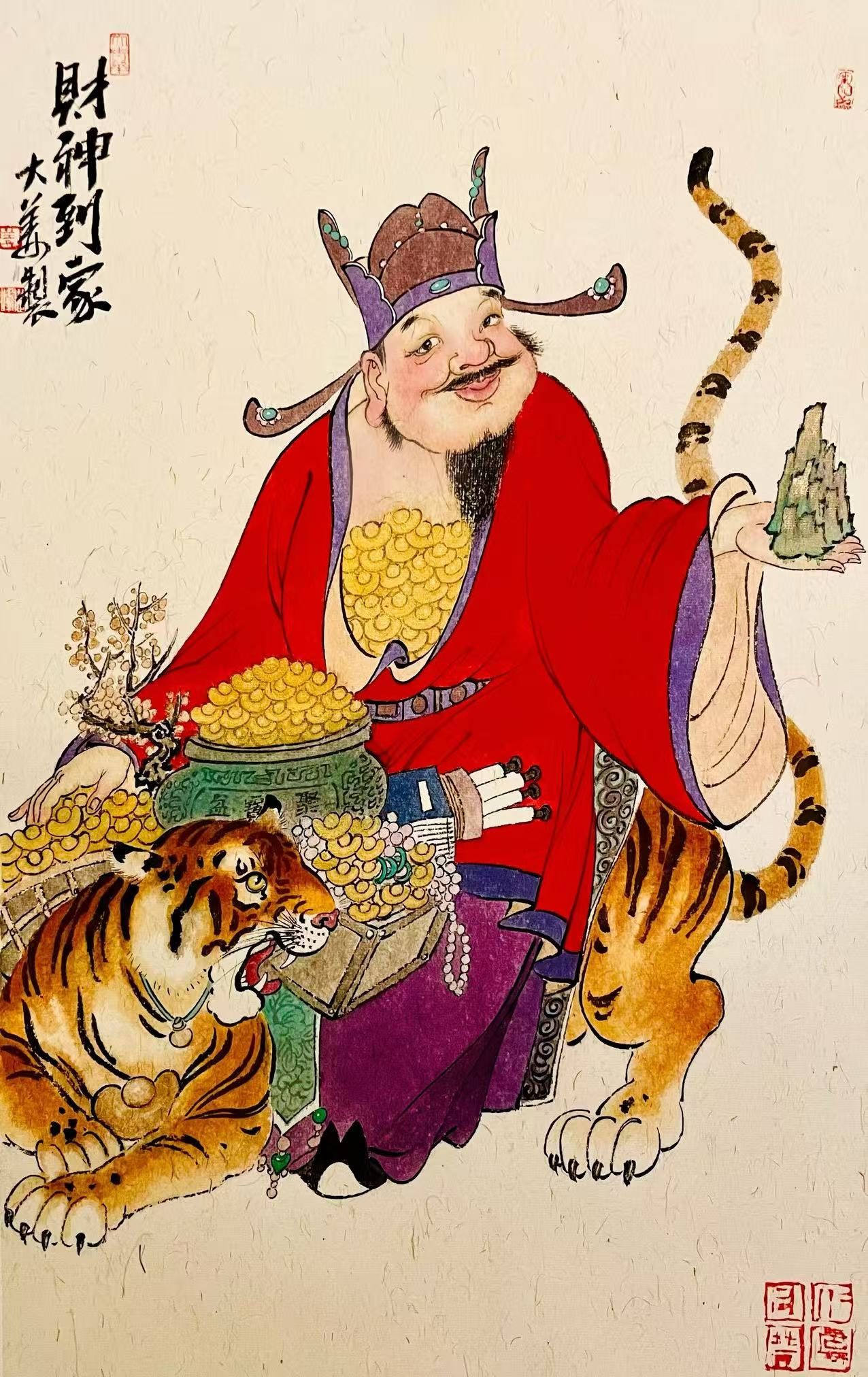
These contemporary Caishen paintings pair the God of Wealth with each of the twelve Chinese zodiac animals: Rat, Ox, Tiger, Rabbit, Dragon, Snake, Horse, Goat / Sheep, Monkey, Rooster, Dog and Pig. The festive figure carries a traditional wish for prosperity, while the animal gives each work a personal connection.
A meaningful gift
Choose your own zodiac sign, mark someone’s birth year or discuss a pair for two people. The cycle repeats every twelve years. In the lunar-calendar tradition used here, the year changes at Lunar New Year, so January and February birthdays need a closer check.
For your commission
Discuss one zodiac painting, a pair or a coordinated group. Subject, colour, mounting and the proportions of your room can shape the brief. The imagery expresses cultural wishes; it does not promise financial results.
Luohan is the Chinese name for the Buddhist arhat. These figures are understood as accomplished disciples of the Buddha and guardians of his teaching. Their varied expressions and postures invite attention to contemplation and individual character. Discuss a single figure or a considered group, in colour or ink.
The dragon’s associations with water and imperial authority give the subject a rich cultural background. For a larger commission, the sweep of the body, the rhythm of clouds and the proportions of the wall become central. Agree the composition and intended setting before choosing the finer decorative details.
Rat, ox, tiger, rabbit, dragon, snake, horse, goat or sheep, monkey, rooster, dog and pig form a repeating twelve-year cycle. Commission a single animal for a personal occasion, or discuss a complete sequence. The connection is to a calendrical tradition; a birth sign does not determine a person’s character.