Culture & feng shui

A picture can
carry a wish.

寓意 · 风水

Prosperity, protection, peace and reflection. The meanings carried by Chinese art offer another way to choose a work and understand its place in your life.

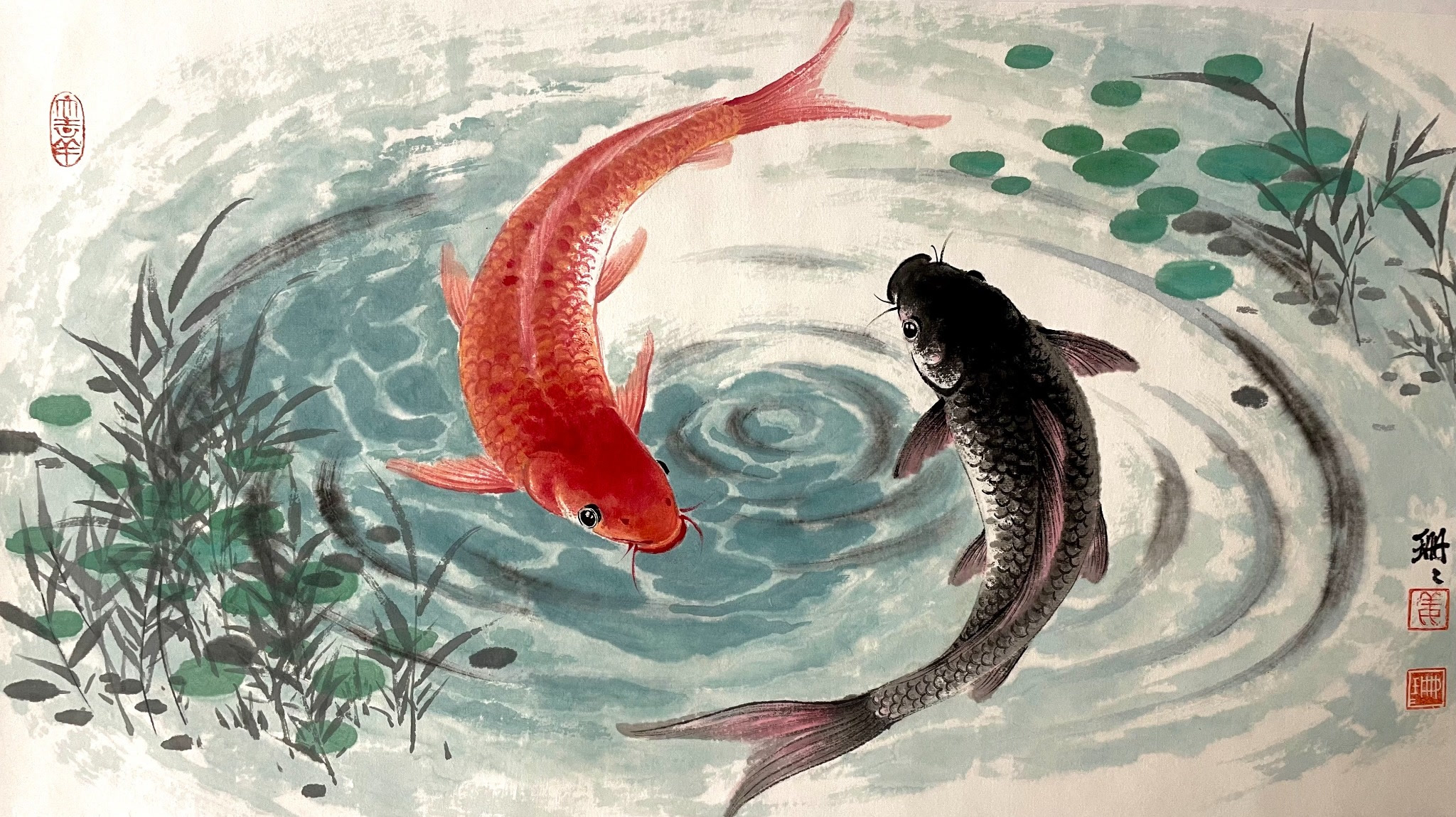
Original Yin-Yang Koi painting: red and black fish in a circular composition

Yin-Yang Koi · original artwork photograph

A language of wishes

How a picture
carries meaning.

A lotus, a fish, a vase: an image may speak through its shape, its name or a familiar story. These associations made paintings and objects ways of expressing affection, hope and welcome.

Feng shui considers a wider relationship between a place and its surroundings. Auspicious motifs are a related cultural vocabulary within the home. We begin with the meaning you connect with, then discuss colour, proportion and placement in your room.

For specific devotional or feng shui preferences, include them in your brief. We describe cultural traditions and help choose an artwork around your wishes.

An illustrated reading · 图文导览

A language of wishes

把祝愿画进日常

Read the sounds and stories behind fish, lotus and the everyday vessel. Open a chapter to look more closely.

01Fish: a little left for tomorrow鱼与余:日子里的余裕
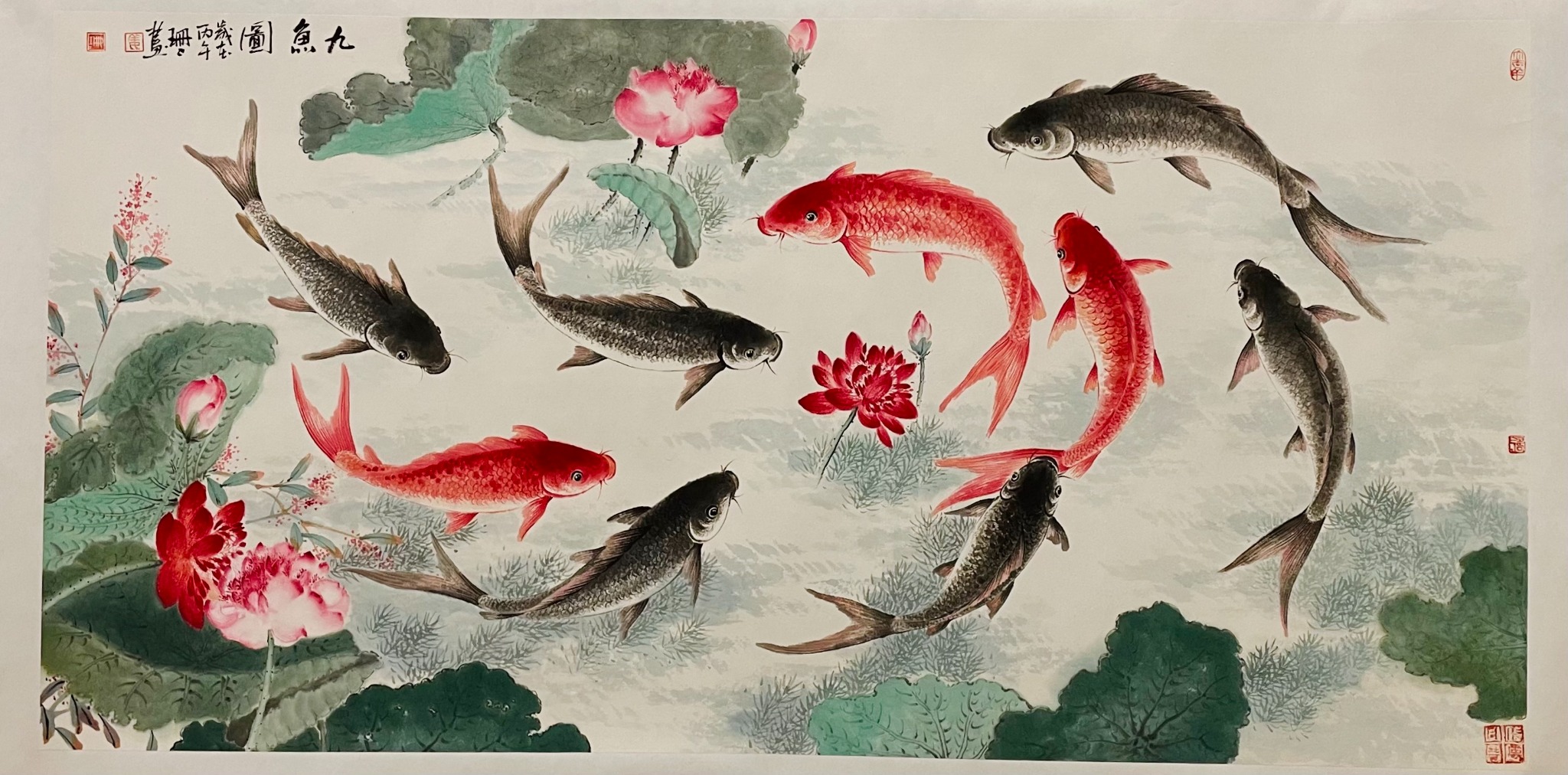
Nine Koi painting

In Mandarin, fish (yú) sounds like surplus (yú). That shared sound turns a familiar creature into a wish: enough to enjoy today, with something left for tomorrow. A fish painting can therefore make a thoughtful gift for a new home or business, carrying the giver’s hope for an abundant life.

“鱼”与“余”同音,让一种熟悉的生命,成为可见的祝愿:今天丰足,明天也留有余裕。因此,鱼题材常适合乔迁或开业之礼,表达赠礼者对安稳、丰盛生活的期盼。

02Lotus: sound and character莲:既有谐音,也有品格
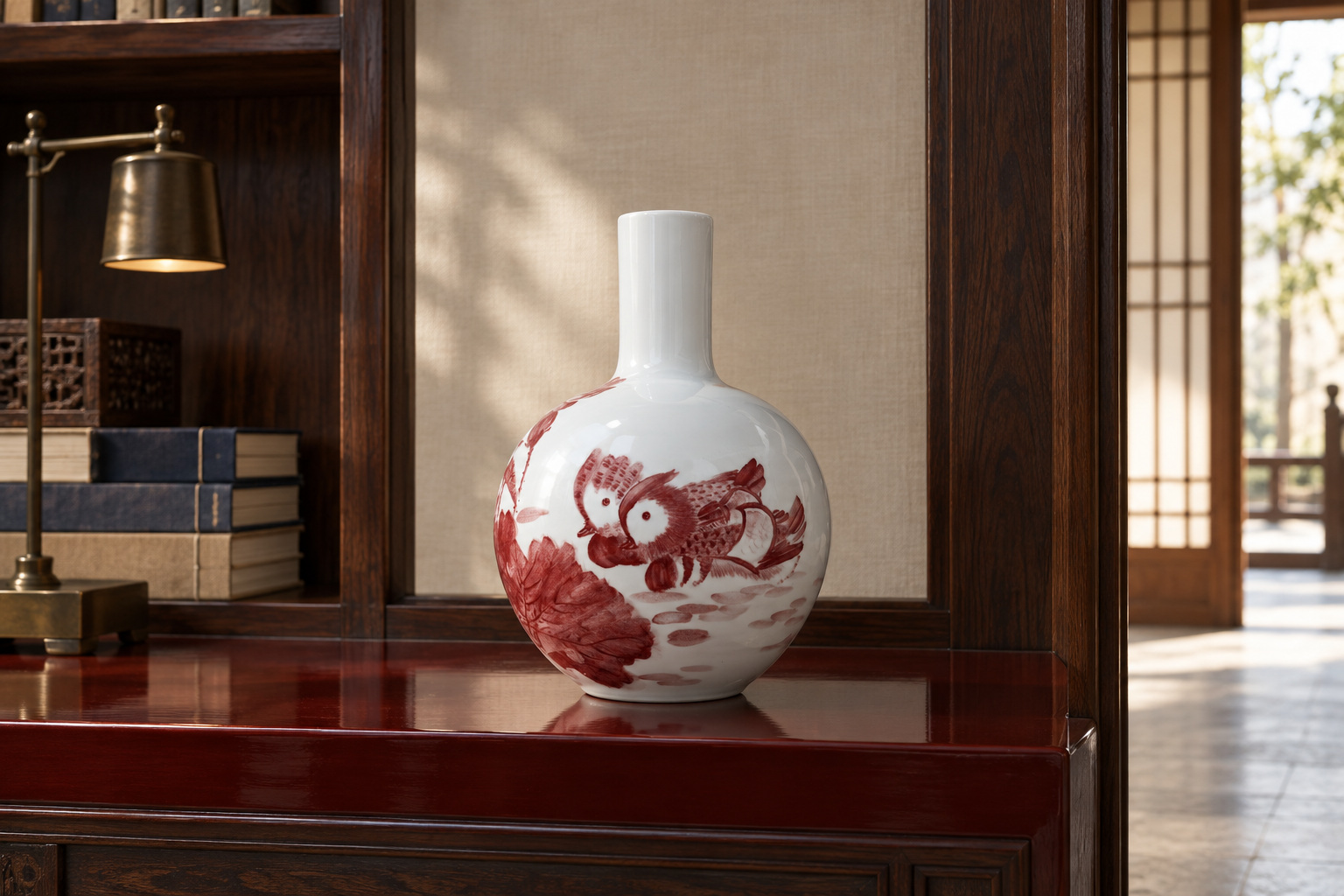
Lotus and waterbird decoration on a rounded vase

When lotus and fish appear together, lotus (lián) echoes continuity, giving the familiar wish for abundance year after year. The lotus also has a different literary association: integrity, growing through mud without losing its purity. The motif shown here is a lotus pond; a quiet study or reading corner lets that association unfold.

莲与鱼同见时,“莲”谐“连”,组成“连年有余”的祝愿。莲又有另一层文学意味:出淤泥而不染的高洁。这里展示的是荷塘水禽纹,将它安放在书房或阅读角,便能让这份清雅慢慢显现。

03A vase, a wish for peace瓶与平:把平安放进日常
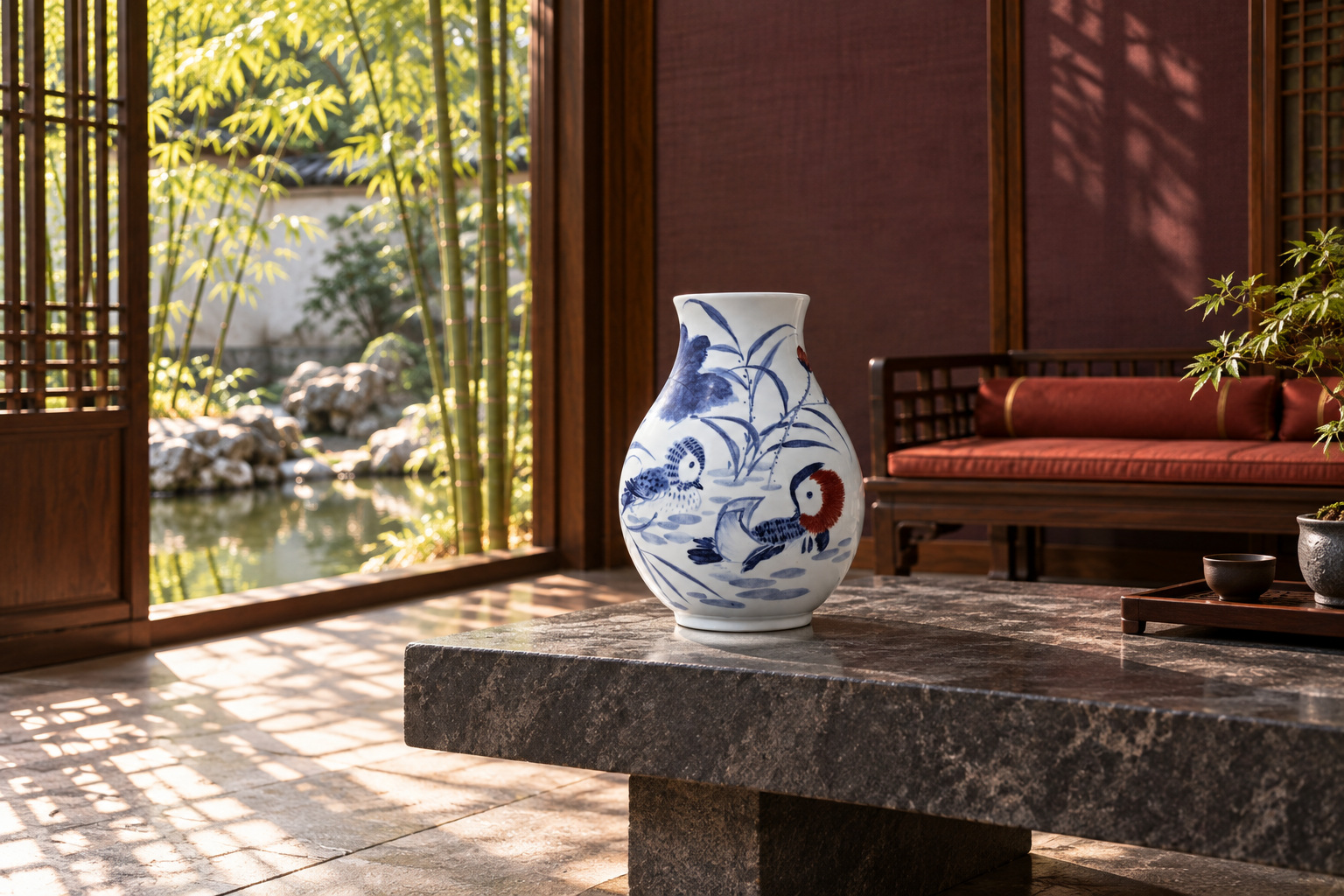
Mandarin ducks and lotus vase on a dining-room console

The word for vase, píng, echoes the first syllable of píng’ān: peace and safety. The decoration adds another layer. On this vessel, paired mandarin ducks among lotus leaves evoke affection and companionship. Together, shape and motif can make a personal wedding or new-home gift.

“瓶”与“平”同音,让人联想到平安。纹饰又添一层心意:这件瓶上,一对鸳鸯游于荷间,寄托爱情与相伴。器形与图案相遇,可以成为婚礼或乔迁时一份贴近生活的祝福。

04Meaning, placed thoughtfully让心意与空间相通
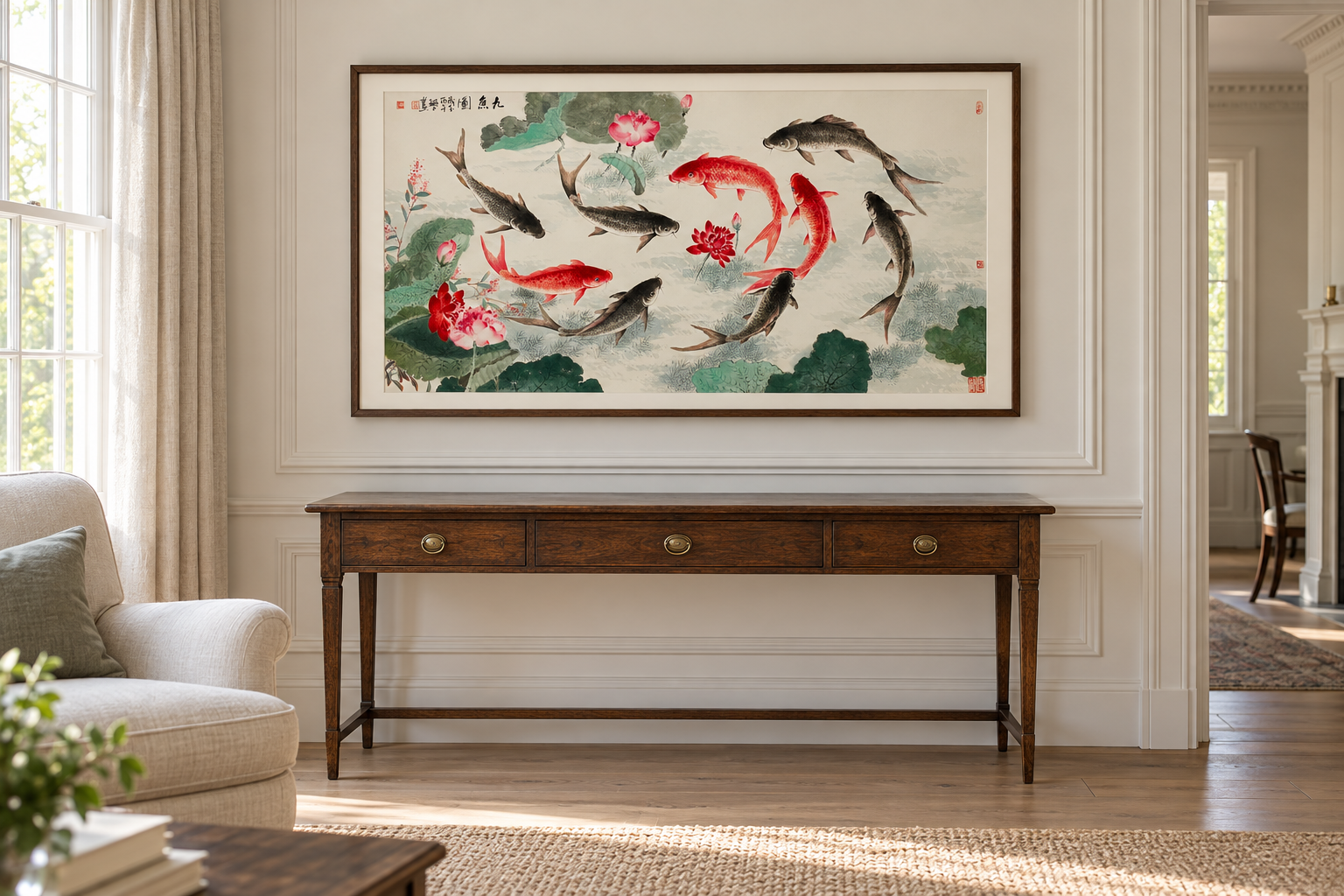
Nine Koi as the focus of a calm living room

Feng shui belongs to a broader tradition of considering buildings and their surroundings. Auspicious images are one cultural language within a home. Begin with a meaning that matters to you, then consider sightlines, light and the ease of moving through the room. A work can carry a wish and give the eye a place to rest.

风水涉及建筑与周围环境关系的传统空间观念。吉祥图像,是居室中表达心意的一种文化语言。可以从与你相通的寓意开始,再考虑视线、光线与通行是否舒适,让作品承载祝愿,也让目光有处停留。

Watch with music & subtitles · 1:19 欣赏字幕短片

A short film · 把祝愿画进日常

A language of wishes

Read the sounds and stories behind fish, lotus and the everyday vessel.

English & Chinese subtitles · Music1:19

Music: “Gymnopedie No. 1” — Kevin MacLeod; composition by Erik Satie. CC BY 4.0. Edited excerpt, level adjustments and fades.

More motifs · 更多吉祥纹样

Traditional associations

What would you like
your piece to express?

These are cultural readings and starting points for a conversation. Meanings vary across periods, communities and individual works.

连年有余

Fish, lotus & continuity

Fish, yú, sounds like surplus. Lotus, lián, echoes continuity. Together they give visible form to a wish for abundance year after year. The image brings a blessing into the room through language as well as colour.

Explore koi paintings
平安

A vase, a wish for peace

The sound of píng, vase, recalls píng in píng’ān: peace and safety. Such wordplay helps a beautiful object carry a personal wish, especially when chosen as a gift.

Explore vessel meanings
并游

Paired ducks & companionship

Mandarin ducks among lotus leaves are an established subject in ceramic decoration. Their paired presence can express affection and companionship—a fitting starting point for an anniversary or a shared home.

Read the paired-duck vase
榴实

Pomegranate & a flourishing family

A split pomegranate makes its many seeds visible. In traditional auspicious imagery, that abundance of seeds carried wishes for children and family continuity. The meaning is cultural; the choice of a gift should remain personal.

Read the pomegranate vase
卷四The stories behind the paintings

Symbols & stories

Read the painting.
Feel the connection.

A fish, a lotus, a curl of cloud. Familiar subjects carry layers of language, belief and artistic interpretation.

Explore their cultural background, then look again at the details of the painting. Museum references below provide context for the motifs; they are not attributions of the works offered here.

观画 · 读意
01Fish, lotus & abundance

Look closely

Red, black and pale fish gather and disperse among lotus leaves. Their changing directions carry the eye across the wide composition; the open water gives each movement room to breathe.

A language of wishes

In Chinese, fish (yú, 鱼) echoes the word for surplus (余). Lotus (lián, 莲) can echo “continuous” (连). Together, the motifs express a wish for continuing abundance. This is a cultural association, rather than a promised outcome.

Nine-fish imagery also has a literary history. The Metropolitan Museum connects it with the “nine similitudes” in the Book of Odes, a poetic tradition associated with longevity and constancy.

For a commission

The number and arrangement of fish, the lotus colour and the width of the composition are useful starting points for a room-specific brief.

Cultural references:Smithsonian · Fish and lotusThe Met · Nine carp
02Movement, contrast & balance

Look closely

The red and black koi move around a shared centre. Their bodies, tails and the surrounding ripples create a circular rhythm, while small plants interrupt the open water.

A contemporary reading

Yin and yang describe contrasting yet interdependent forces: each is understood in relation to the other, and their relationship changes through cycles. Day and night offer a familiar example.

Here, the circling fish invite a visual reading of balance as movement. This is an interpretation of the painting’s composition, rather than a claim that this particular red-and-black arrangement reproduces an ancient diagram.

For a commission

Discuss whether you prefer a quieter composition with more open water or a stronger sense of circular energy. Colour and surrounding detail can be considered alongside your interior.

Cultural reference:Art Institute of Chicago · Yin and yang
03The dragon, clouds & the court

Look closely

Follow the curve of the dragon’s body, then the smaller rhythms of scales, claws and clouds. A vertical arrangement draws the eye upwards; a horizontal one can carry that movement across a larger wall.

More than one meaning

The Chinese dragon has longstanding associations with water, protection and good fortune, as well as imperial authority. Its meaning depends on the object and its historical setting. A Qing court vase in the Metropolitan Museum provides one example of the dragon’s imperial use.

In these contemporary paintings, golden colour and elaborate detail offer a courtly visual reference. They do not establish a historical date, imperial provenance or a particular rank for the works.

For a commission

Start with the wall proportions and the distance from which the painting will be seen. A large dragon needs room for its full silhouette and cloud patterns to be appreciated.

Cultural reference:The Met · Dragon amid clouds
04The horse: movement & character

Look closely

The full figures place decorated saddles and harnesses within curling clouds. The close portraits shift attention to another kind of detail: an alert eye, the turn of a head and the edges of the mane.

A personal connection

The horse is one of the twelve animals in the Chinese zodiac’s repeating year cycle. A horse commission can mark a personal connection to that tradition, or simply a love of the animal.

Energy, poise and freedom are useful ways to discuss the feeling you want from a painting. Here they are creative interpretations, rather than fixed meanings attached to every horse image.

For a commission

Choose between a full figure and a closer portrait, then consider the horse’s colour, pose, background and the role of decorative detail.

Cultural reference:The Met · The zodiac cycle

Make it personal

A subject with meaning.

From legendary guardians to the zodiac, explore a personal starting point for a commission. Design and feasibility are agreed together.

钟馗The legendary demon-quellerZhong Kui

Zhong Kui is a protective figure in Chinese folklore. A legend traced to the Tang dynasty tells of his appearance in Emperor Minghuang’s dream. His commanding face, official hat and dramatic gestures give painters a subject rich in character. The red-line example in our collection offers one expressive approach.

The Met · Zhong Kui
Discuss this subject
财神Wishes for prosperityCaishen

Twelve animals, twelve personal connections

These contemporary Caishen paintings pair the God of Wealth with each of the twelve Chinese zodiac animals: Rat, Ox, Tiger, Rabbit, Dragon, Snake, Horse, Goat / Sheep, Monkey, Rooster, Dog and Pig. The festive figure carries a traditional wish for prosperity, while the animal gives each work a personal connection.

A meaningful gift

Choose your own zodiac sign, mark someone’s birth year or discuss a pair for two people. The cycle repeats every twelve years. In the lunar-calendar tradition used here, the year changes at Lunar New Year, so January and February birthdays need a closer check.

For your commission

Discuss one zodiac painting, a pair or a coordinated group. Subject, colour, mounting and the proportions of your room can shape the brief. The imagery expresses cultural wishes; it does not promise financial results.
Find your zodiac sign and birth yearsThe Met · Caishen in popular tradition
Discuss this subject
View the Caishen collection
罗汉Character & contemplationLuohan

Luohan is the Chinese name for the Buddhist arhat. These figures are understood as accomplished disciples of the Buddha and guardians of his teaching. Their varied expressions and postures invite attention to contemplation and individual character. Discuss a single figure or a considered group, in colour or ink.

The Met · Buddhist painting
Discuss this subject

For playful character paintings, explore our separate Zen & everyday joy selection.

View everyday character paintings
大金龙A composition for a larger spaceLarge Golden Dragon

The dragon’s associations with water and imperial authority give the subject a rich cultural background. For a larger commission, the sweep of the body, the rhythm of clouds and the proportions of the wall become central. Agree the composition and intended setting before choosing the finer decorative details.

The Met · Dragon amid clouds
Discuss this subject
十二生肖A personal year, a shared traditionThe Twelve Zodiac Animals

Rat, ox, tiger, rabbit, dragon, snake, horse, goat or sheep, monkey, rooster, dog and pig form a repeating twelve-year cycle. Commission a single animal for a personal occasion, or discuss a complete sequence. The connection is to a calendrical tradition; a birth sign does not determine a person’s character.

The Met · The zodiac cycle
Discuss this subject

Dachu Art · Enquiries

Choose a meaning.
Find a personal expression.

Tell us the story, tradition or occasion that matters to you. We can then discuss a subject, format and presentation.

Begin a conversation

Privacy

Your enquiry details.

The enquiry form prepares a message in your browser. It does not submit your details to a database or send an email automatically. You choose whether to send the message through your own email app.

This website does not add advertising trackers or store form details in browser storage. If you email us, the information you choose to share will be used to discuss and respond to your enquiry.

For questions about information you have shared, contact info@dachuart.co.uk.